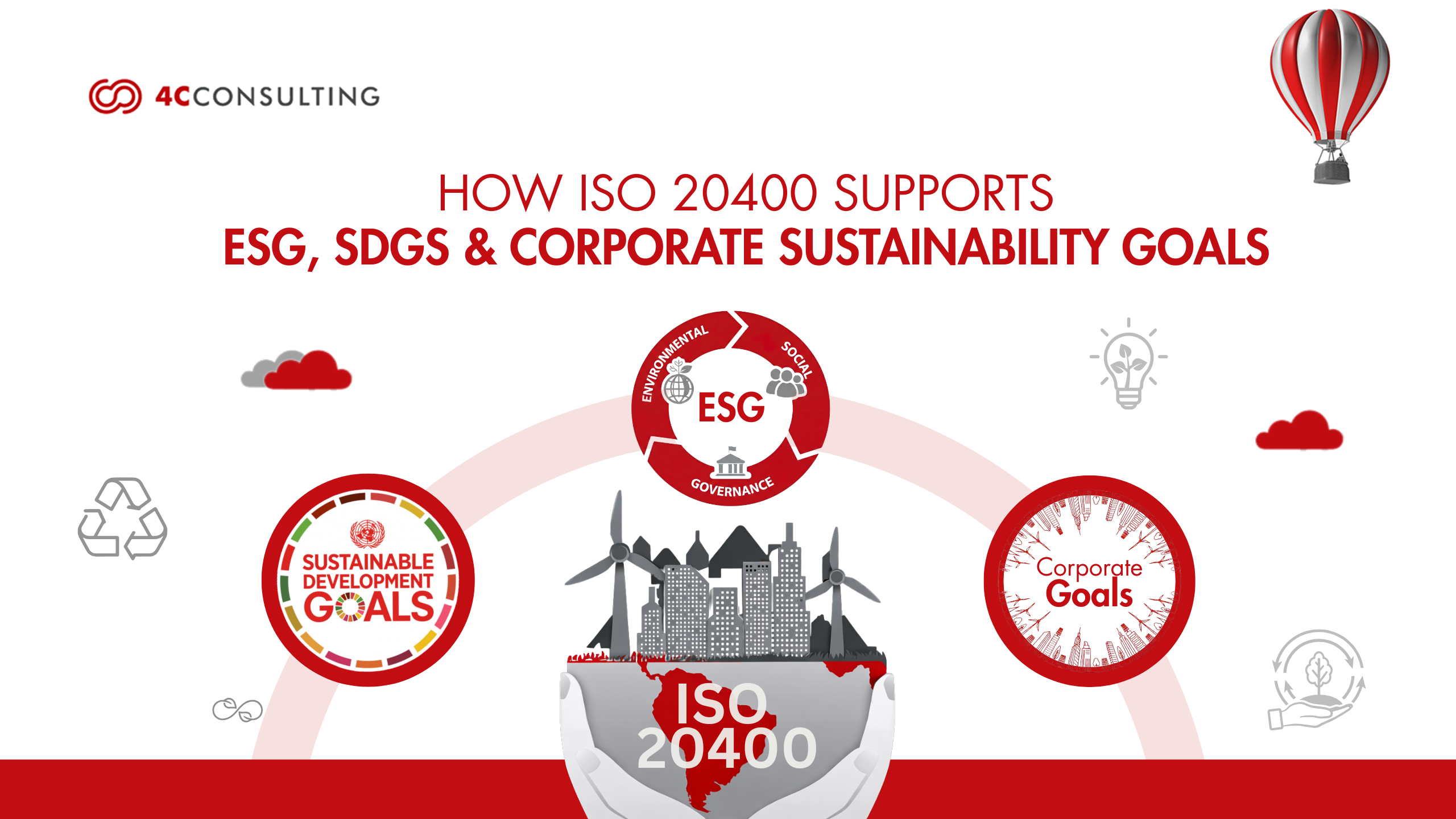
How ISO 20400 Supports ESG, SDGs & Corporate Sustainability Goals
21st Feb, 2026Sustainability is no longer a voluntary corporate initiative. It has become a business requirement shaped by regulatory expectations, due-diligence obligations, buyer mandates and increasing supply-chain transparency. Organisations are now assessed not only on their internal operations, but also on how effectively they manage environmental, social and governance risks across their value chains.
Environmental impact, labour practices, ethical conduct and governance controls are increasingly evaluated beyond organisational boundaries. Supplier behaviour directly influences ESG ratings, sustainability disclosures, audit outcomes and brand credibility. As a result, sustainability performance can no longer be managed through policy statements or reporting frameworks in isolation. In practice, this places ESG criteria in procurement and supply chain decisions at the centre of sustainability performance, making ISO 20400 sustainable procurement a critical operational system.
Decisions related to supplier selection, sourcing practices and contract management determine a significant portion of an organisation’s sustainability footprint. Without structured controls integrated within procurement processes, sustainability commitments remain difficult to enforce across complex supply chains.
What Is ISO 20400 Sustainable Procurement Guidance?
ISO 20400 is an international guidance standard that provides a structured framework for integrating sustainability into procurement activities. It focuses on how procurement decisions influence environmental responsibility, social accountability and ethical governance across the supply chain. ISO 20400 sustainable procurement standard helps organization’s structure procurement governance in a way that systematically integrates sustainability considerations.
ISO 20400 is not a certifiable management system and is not intended for audit-based conformity assessment. As a result, ISO 20400 certification or ISO 20400 sustainable procurement certification does not apply in the traditional sense and the guidance should instead be used as a reference framework for strengthening procurement practices. It serves as a strategic reference for integrating sustainability considerations into procurement strategies, policies and operational decision-making. The guidance is designed to be applied flexibly, allowing organisations to align procurement practices with their business context, supply-chain complexity and sustainability risk profile.
Key Principles of Sustainable Procurement Under ISO 20400
ISO 20400 is grounded in a set of principles that establish the ethical, governance and social foundations of sustainable procurement. These principles guide how sustainability considerations are applied within procurement decision-making and supplier management, ensuring alignment with legal, societal and international expectations. The key principles include:
- Accountability
- Transparency
- Ethical behaviour
- Respect for stakeholder interests
- Respect for the rule of law
- Respect for international norms of behaviour
- Respect for human rights
These principles provide a consistent reference for managing supplier behaviour and sustainability-related risks across the supply chain.
Role of Procurement in Sustainability Framework Implementation
- Sourcing Criteria Alignment: Sustainability frameworks define environmental, social and governance expectations, but their application depends on how these expectations are reflected in sourcing decisions. Procurement operationalises framework requirements by integrating sustainability criteria into supplier qualification, tender evaluation and sourcing approvals. This ensures sustainability expectations are applied at the point of supplier selection rather than remaining high-level commitments. This ensures ESG criteria in procurement and supply chain activities are consistently applied during supplier selection and sourcing approvals.
- Contractual Integration: Many sustainability frameworks require demonstrable accountability across the supply chain. Procurement supports this by incorporating sustainability requirements into supplier contracts, codes of conduct and commercial terms. Contractual integration establishes enforceable expectations for supplier behaviour and provides a formal basis for monitoring, escalation and corrective action.
- Supplier Performance Monitoring: Sustainability frameworks focus on ongoing oversight rather than one-time assessments. Procurement enables this by defining sustainability performance indicators, review mechanisms and follow-up processes linked to environmental, social and governance requirements. Documented monitoring supports continued alignment with sustainability framework expectations over time.
- Evidence And Documentation: Frameworks related to sustainability reporting, regulatory due diligence and external assessments require verifiable evidence of supplier management practices. Procurement generates this evidence through documented sourcing decisions, supplier evaluations, contractual records and performance reviews. These records form the operational evidence base for audits, disclosures and third-party assessments.
- Consistent Application Across Suppliers: Organisations operating across multiple suppliers and regions require consistency in framework implementation. Procurement provides this by standardising sustainability criteria, processes and controls across sourcing activities, reducing variability and supporting uniform application across the supply chain.
How ISO 20400 Supports ESG, SDGs & Corporate Sustainability Goals
ISO 20400 provides a procurement-level mechanism for integrating ESG and SDG requirements into sourcing governance, supplier evaluation and ongoing supplier oversight.
- ESG Integration Through Procurement: ISO 20400 provides guidance on integrating environmental, social and governance considerations into procurement governance rather than treating them as parallel compliance activities. It clarifies how ESG expectations are reflected in procurement strategy, decision criteria and supplier engagement models, enabling consistent application of ESG considerations across sourcing activities without relying on ad hoc interpretation. This alignment supports ISO 20400 compliance for corporate sustainability goals by integrating ESG expectations directly into procurement governance.
- Execution Of SDG Commitments: ISO 20400 supports the translation of SDG-related commitments into procurement-relevant actions by aligning responsible sourcing practices with sustainability priorities such as decent work, responsible consumption and ethical business conduct. The guidance helps organisations reflect SDG intent within procurement decision frameworks, ensuring commitments are addressed through routine supplier interactions rather than standalone initiatives.
- Alignment Of Sustainability Goals: Corporate sustainability goals often span multiple functions and frameworks. ISO 20400 provides a common procurement reference that aligns sustainability objectives with sourcing governance, supplier expectations and procurement oversight. This alignment reduces fragmentation between sustainability strategy and procurement execution, supporting consistent application across the supply chain.
- Supplier-Level Accountability: ISO 20400 reinforces accountability by guiding how sustainability expectations are communicated, assessed and reviewed at the supplier level. It supports structured engagement with suppliers by clarifying roles, responsibilities and performance expectations, enabling organisations to manage sustainability performance through defined procurement relationships rather than informal controls.
- Ethical And Responsible Sourcing: Ethical behaviour and responsible sourcing are core principles within ISO 20400. The guidance supports organisations in addressing ethical conduct, fair operating practices and respect for human rights within procurement activities by providing a reference for integrating these considerations into supplier engagement and decision-making processes.
- Governance And Transparency Controls: ISO 20400 strengthens procurement governance by supporting transparency, traceability and documented decision-making. It provides guidance on structuring procurement controls that enable visibility into sourcing decisions and supplier management practices, supporting internal governance requirements and external scrutiny.
- Evidence-Based Sustainability Reporting: Sustainability reporting increasingly requires demonstrable evidence of supply-chain management practices. ISO 20400 supports evidence-based reporting by guiding how sustainability considerations are documented within procurement processes, supplier evaluations and performance reviews, providing a defensible basis for ESG disclosures and sustainability reporting.
Benefits of ISO 20400 for Supply Chain Sustainability
- Supplier Accountability: ISO 20400 strengthens accountability by defining how sustainability expectations are assigned, communicated and reviewed within supplier relationships. Procurement teams can establish clear expectations related to labour practices, ethical conduct and environmental responsibility as part of supplier onboarding and engagement. This ensures accountability is managed through structured procurement governance rather than informal assurances or reactive interventions.
- Process Uniformity: Organisations operating across multiple locations often apply sustainability requirements unevenly across suppliers. ISO 20400 supports process uniformity by providing a common reference for integrating sustainability considerations into procurement activities such as sourcing, evaluation and supplier engagement. This enables consistent application of sustainability expectations while allowing flexibility for regional or category-specific considerations.
- Risk Reduction: Sustainability-related risks typically arise when environmental, social or ethical factors are not considered early in procurement decisions. ISO 20400 supports risk reduction by guiding systematic consideration of these factors during supplier selection and ongoing management. This allows procurement teams to identify and address potential weaknesses before they escalate into compliance issues, operational disruption or reputational exposure.
- Execution Alignment: Corporate sustainability strategies often lose effectiveness at the point of execution. ISO 20400 helps close this gap by aligning procurement governance with sustainability objectives. Sustainability priorities related to responsible sourcing, ethical conduct or social responsibility are reflected directly in procurement decision frameworks, ensuring commitments are applied consistently through routine sourcing and supplier management activities.
- Disclosure Readiness: External sustainability assessments increasingly require verifiable evidence of supply-chain practices. ISO 20400 supports disclosure readiness by guiding how sustainability considerations are documented within procurement processes. Supplier evaluations, contractual sustainability requirements and performance reviews form a reliable evidence base for ESG disclosures, due-diligence responses and sustainability reporting.
- Maturity Enablement: Sustainability integration within procurement is an evolving process. ISO 20400 supports maturity enablement by allowing organisations to progressively strengthen sustainability considerations as procurement capabilities develop. Initial application can focus on priority categories or high-risk suppliers, with broader integration achieved as governance, oversight and supplier engagement practices mature over time.
ISO 20400 sustainable procurement provides organisations with a practical mechanism to operationalise sustainability across sourcing and supplier management. By aligning procurement governance with ESG expectations and sustainability priorities, ISO 20400 compliance for corporate sustainability goals becomes achievable through structured, repeatable procurement processes rather than fragmented initiatives.
How 4C Consulting Helps You Implement ISO 20400 Sustainable Procurement?
4C Consulting enables organizations to integrate ISO 20400 sustainable procurement principles effectively through a structured, implementation-driven approach. With over 20+ years of consulting experience, 3000+ successful management system implementations. Our experts help businesses transform procurement into a strategic sustainability function. Our IRCA-certified consultants guide you through every step from sustainability gap assessment and supplier evaluation to documentation, awareness programs and ISO 20400 training. Backed by our deep expertise in ISO 9001, ISO 14001 and ISO 26000, we ensure smooth alignment with ISO 20400:2017 sustainable procurement guidance and readiness for ISO 20400 certification. 4C Consulting empowers your organization to achieve measurable sustainability performance, enhance supplier transparency and strengthen stakeholder trust. Get a 1-hour Free Sustainable Procurement Consultation with our experts and begin your ISO 20400 journey with confidence.

Frequently Asked Questions:
ISO 20400 is a procurement guidance standard focused specifically on integrating sustainability into sourcing and supplier management processes. ESG frameworks, on the other hand, are broader performance and reporting structures that evaluate environmental, social, and governance outcomes across the entire organization. ISO 20400 provides operational procurement controls, while ESG frameworks define performance indicators and disclosure expectations.
Companies integrate ISO 20400 by integrating ESG criteria into supplier qualification, tender evaluation, contract clauses and performance monitoring systems. Environmental, social, and governance risks are assessed during supplier selection rather than after onboarding. Procurement teams align sourcing policies with ESG objectives and document sustainability controls for reporting. This ensures ESG expectations are translated into structured procurement decisions.
ISO 20400 strengthens ESG performance by operationalizing sustainability within procurement governance. It ensures environmental responsibility, social accountability, and ethical conduct are integrated into supplier relationships. By structuring documentation, oversight, and supplier monitoring, organizations generate verifiable ESG evidence. This improves ESG ratings, sustainability disclosures, and stakeholder confidence.
Industries with complex global supply chains such as manufacturing, pharmaceuticals, infrastructure, automotive, and energy benefit significantly from ISO 20400. These sectors face high supplier-related ESG risk exposure. ESG frameworks apply across all industries for disclosure and investor evaluation, while ISO 20400 is particularly valuable where procurement decisions drive sustainability impact.
Sustainable procurement standards such as ISO 20400, ISO 26000 and supplier codes of conduct provide structured mechanisms for ESG reporting. They help organizations demonstrate responsible sourcing, supplier accountability, and ethical governance. These standards generate documented evidence required for ESG disclosures, regulatory due diligence, and third-party sustainability assessments.
ESG frameworks define what organizations must report in terms of environmental, social, and governance performance. ISO 20400 influences how procurement processes generate the operational evidence supporting those disclosures. ESG reporting reflects performance metrics, while ISO 20400 strengthens the control environment behind supplier sustainability management.
ISO 20400 is a guidance standard and is not certifiable in the traditional sense. Therefore, accredited certification bodies do not issue ISO 20400 certificates. Organizations may seek independent assessments or procurement maturity evaluations, but these are advisory reviews rather than formal certifications. Implementation is demonstrated through governance structure and documented procurement controls.