
Table of Contents
- Build AI Compliance Skills with ISO/IEC 42001 Live Webinar
- Understanding ISO 42001 (AI Risk Management)
- Strengthen Your AI Management and Information Security Framework
- Understanding ISO 27001 (Information Security Management)
- ISO 42001 vs ISO 27001: Key Differences Explained
- Do You Need ISO 42001, ISO 27001 or Both?
- Benefits of Integrating ISO 27001 and ISO/IEC 42001
- Industries That Should Consider Both
- FAQs
ISO 42001 vs ISO 27001: Do You Need Both for AI & Data Security?
5th Jun, 2026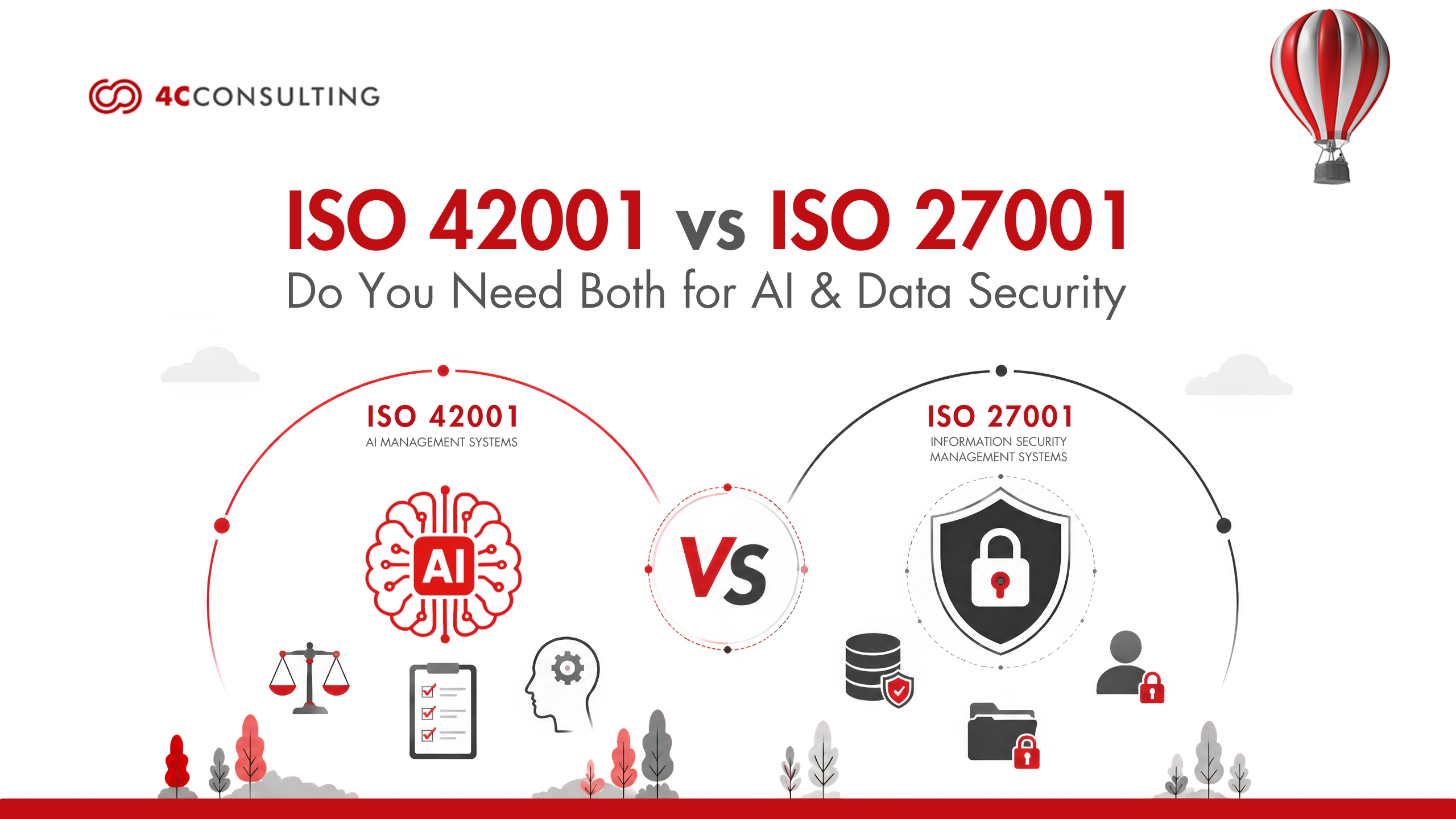
Artificial intelligence is transforming how organizations automate processes, analyse data, make decisions and deliver services. As AI adoption accelerates, businesses are facing new challenges that extend beyond traditional information security, including AI governance, transparency, accountability and regulatory compliance.
Many organizations already rely on ISO 27001 to protect their information assets. However, with the introduction of ISO 42001, a new question has emerged: Is information security alone enough or do organizations also need a dedicated framework for managing AI systems?
The answer is not always straightforward. While both standards support risk management and organizational governance, they address different challenges and serve distinct purposes.
In this blog, we’ll explore the differences between ISO 42001 and ISO 27001, examine how they complement each other and help you determine whether implementing one or both is the right choice for your organization.
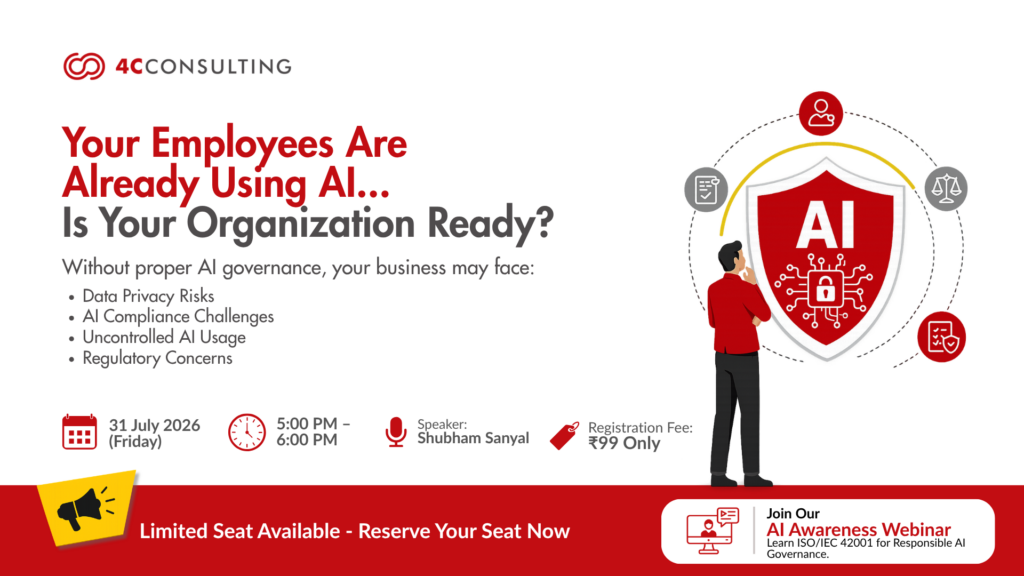
Build AI Compliance Skills with ISO/IEC 42001 Live Webinar
Understanding ISO 42001 (AI Risk Management)
The rapid adoption of AI has introduced risks that traditional management systems were never designed to handle, including bias, lack of explainability, inaccurate outputs and ethical concerns. To address these challenges ISO/IEC 42001:2023 was developed as the world’s first international standard for Artificial Intelligence Management Systems (AIMS).
Unlike conventional management system standards, ISO 42001 focuses specifically on the governance and oversight of AI systems. It helps organizations establish clear accountability, assess and manage AI-related risks, monitor AI performance and demonstrate responsible AI practices to customers, regulators and other stakeholders.
For businesses adopting AI, ISO 42001 provides a structured framework to balance innovation with trust, compliance and effective risk management.
Key Areas Covered by ISO 42001
- AI governance and accountability
- AI risk assessment and mitigation
- Fairness, transparency and explainability
- Human oversight of AI systems
- Monitoring and continual improvement
- Compliance with emerging AI regulations
- Responsible use of AI across the organization
Strengthen Your AI Management and Information Security Framework
Understanding ISO 27001 (Information Security Management)
While ISO 42001 developed to address the unique challenges of AI, ISO 27001 Standard is one of the most established and widely adopted management system standards. For years, organizations across industries have relied on ISO 27001 to build robust information security frameworks and protect sensitive data from evolving cyber threats.
The standard provides a structured approach to identifying, assessing and controlling information security risks. It helps organizations safeguard business information, customer data, intellectual property and other critical assets by ensuring their confidentiality, integrity and availability.
Today, ISO 27001 remains the foundation of information security for organizations seeking to strengthen cybersecurity, meet regulatory requirements and build stakeholder trust.
Key Focus Areas of ISO 27001
- Information security governance and policies
- Risk assessment and risk treatment
- Data confidentiality, integrity and availability
- Access control and user permissions
- Cybersecurity and threat management
- Incident response and recovery planning
- Business continuity and resilience
- Regulatory and legal compliance
ISO 42001 vs ISO 27001: Key Differences Explained
While both ISO 42001 and ISO 27001 help organizations manage risk and improve governance, their areas of focus are distinct. ISO 27001 is centred on information security, whereas ISO 42001 addresses the unique risks and responsibilities associated with AI systems. Understanding these differences is essential for organizations seeking to strengthen security, compliance and trust in an increasingly AI-driven environment.
| Aspect | ISO 42001 | ISO 27001 |
|---|---|---|
| Primary Purpose | Manage and govern AI systems responsibly | Protect information and data from security threats |
| Management System | Artificial Intelligence Management System (AIMS) | Information Security Management System (ISMS) |
| Key Risks Addressed | AI bias, hallucinations, lack of transparency, ethical concerns | Cyberattacks, data breaches, unauthorized access, data loss |
| Main Focus | Responsible AI development, deployment and oversight | Information security, confidentiality, integrity and availability |
| Who Should Implement It? | Organizations developing or using AI systems | Organizations handling sensitive information |
| Regulatory Alignment | AI regulations and responsible AI requirements | Data protection and cybersecurity requirements |
| Human Oversight Requirements | Explicitly requires human oversight of AI systems | Not specifically focused on AI oversight |
| Typical Business Applications | Generative AI, machine learning, intelligent automation, AI-powered products | IT infrastructure, cloud services, customer databases, enterprise systems |
| Certification Priority | Best suited for organizations with significant AI adoption | Often considered a foundational certification for information security |
| Relationship Between Standards | Governs how AI systems operate and make decisions | Secures the data and information used by those systems |
.
While ISO 27001 has long been the benchmark for managing information security risks, ISO 42001 was introduced to address the emerging challenges of AI governance. As organizations increasingly adopt AI, many are finding that information security and responsible AI management are complementary requirements rather than separate priorities.
This raises an important question: Do organizations need both standards?
Do You Need ISO 42001, ISO 27001 or Both?
The right choice depends on your organization’s use of AI, the type of data it manages and its compliance requirements.
Choose ISO 42001 If Your Organization:
- Develops, deploys or manages AI systems.
- Uses AI to support business decisions or customer interactions.
- Needs to address AI-specific risks such as bias, transparency and accountability.
- Wants to demonstrate responsible AI governance to customers, regulators and stakeholders.
- Is preparing for emerging AI regulations and compliance requirements.
Choose ISO 27001 If Your Organization:
- Primarily focuses on protecting sensitive business and customer information.
- Needs a structured Information Security Management System (ISMS).
- Wants to strengthen cybersecurity and reduce the risk of data breaches.
- Must meet customer, contractual or regulatory information security requirements.
- Handles confidential, financial, healthcare or personal data.
Choose Both If Your Organization:
- Uses AI systems that rely on sensitive or business-critical data.
- Develops or provides AI-powered products and services.
- Wants to manage both information security risks and AI-related risks.
- Operates in highly regulated industries such as healthcare, finance, technology or government.
- Seeks a comprehensive framework for security, compliance and responsible AI governance.
For many organizations adopting AI, implementing both standards provides a stronger foundation for managing risk, building stakeholder trust and supporting sustainable innovation.
Benefits of Integrating ISO 27001 and ISO/IEC 42001
Organizations implementing both can achieve stronger governance, improved security and greater stakeholder confidence.
Enhanced Risk Visibility
Organizations gain a holistic view of risks by addressing both traditional information security threats and AI-specific challenges such as bias, lack of transparency and unintended outcomes.
Stronger Regulatory Preparedness
With governments introducing new AI regulations and data protection requirements, integrating both standards helps organizations demonstrate a proactive approach to compliance and governance.
Increased Trust and Credibility
Customers, investors and business partners are increasingly evaluating how organizations protect data and govern AI. Implementing both standards helps build confidence in your organization’s security and AI practices.
More Reliable AI Systems
Combining information security controls with AI governance measures helps improve the reliability, integrity and accountability of AI-driven processes and decisions.
Improved Operational Resilience
A unified approach to risk management helps organizations identify potential issues earlier, reduce disruptions and strengthen business continuity across both digital and AI-enabled operations.
Competitive Differentiation
Organizations that can demonstrate both robust information security and responsible AI governance are better positioned to meet customer expectations, win business opportunities and stand out in increasingly regulated markets.
This integration creates a strong foundation for organizations seeking to innovate with AI while maintaining security, compliance and stakeholder trust.
Industries That Should Consider Both
Although ISO 42001 and ISO 27001 can benefit almost any organization, certain industries gain significant value from implementing both.
Technology and Software Companies
Organizations developing AI-powered applications, SaaS platforms, machine learning solutions or generative AI tools can benefit from combining robust information security controls with structured AI governance practices.
Financial Services
Banks, fintech companies, insurance providers and investment firms increasingly use AI for fraud detection, risk assessment, customer service and decision-making. At the same time, they handle highly sensitive financial data and operate under strict regulatory requirements.
Healthcare and Life Sciences
Healthcare organizations are leveraging AI for diagnostics, patient monitoring, medical research and operational efficiency. Implementing both standards helps protect sensitive patient information while ensuring AI systems are used responsibly and transparently.
Manufacturing and Industrial Organizations
Manufacturers are increasingly adopting AI for predictive maintenance, quality control, process optimization and automation. Both standards help secure operational data while ensuring AI-driven decisions remain reliable, accountable and aligned with business objectives.
Although these sectors often see the greatest need for both standards, the combination of ISO 27001 and ISO 42001 can benefit organizations of any size or industry that are looking to strengthen information security, manage AI-related risks and demonstrate responsible innovation.
Build a Robust Artificial Intelligence Management System and Information Security Framework with 4C Consulting
Achieving ISO 42001 Ai certification and ISO 27001 certification requires a clear strategy, practical implementation and a strong understanding of compliance requirements. With extensive experience across industries, 4C Consulting helps organizations streamline the certification process and build effective management systems that support long-term business objectives.
Why Organizations Choose 4C Consulting
- 20+ Years of consulting experience
- 3000+ Client Engagements completed
- 50+ Certification Body Associations
- 900+ Audit Programs conducted
- 15,000+ Training Hours delivered
Our experts provide end-to-end support throughout the certification journey, including Gap Analysis, Awareness Training, Documentation Development, Implementation & Monitoring, Internal Audits, Management Reviews and Certification Audit support. For organizations pursuing both standards, we help integrate common requirements and streamline processes to improve efficiency while strengthening compliance, information security and AI risk management. Contact 4C Consulting today to discuss your ISO 42001 and ISO 27001 certification requirements and create a customized roadmap for successful implementation, integration and certification.
FAQs
1. Does ISO 42001 Replace ISO 27001?
No. ISO 42001 and ISO 27001 serve different purposes. ISO 27001 focuses on information security, while ISO 42001 focuses on managing AI-related risks and responsibilities. For many organizations, the two standards work best together rather than as alternatives.
2. Can ISO 42001 and ISO 27001 Be Integrated?
Yes. Both standards follow a similar management system structure, making integration easier. Organizations can align processes such as risk management, internal audits, management reviews and continual improvement to reduce duplication and improve efficiency.
3. Is ISO 42001 Certification Worth It?
For organizations that develop, deploy or rely on AI systems, ISO 42001 certification can provide significant value. It helps establish a structured Artificial Intelligence Management System (AIMS), improve AI risk management, strengthen stakeholder trust and demonstrate a commitment to responsible AI practices. As AI regulations continue to evolve, certification can also help organizations prepare for future compliance requirements and gain a competitive advantage.
4. What Is the Future of ISO 42001?
The future of ISO 42001 is closely tied to the rapid growth of Artificial Intelligence and increasing regulatory oversight worldwide. As governments introduce AI-related regulations and organizations face greater expectations around transparency, accountability and ethical AI use, ISO 42001 is expected to become an important benchmark for AI governance. Many organizations are likely to adopt the standard as part of their broader risk management, compliance and digital transformation strategies.