





Frequently Asked Questions
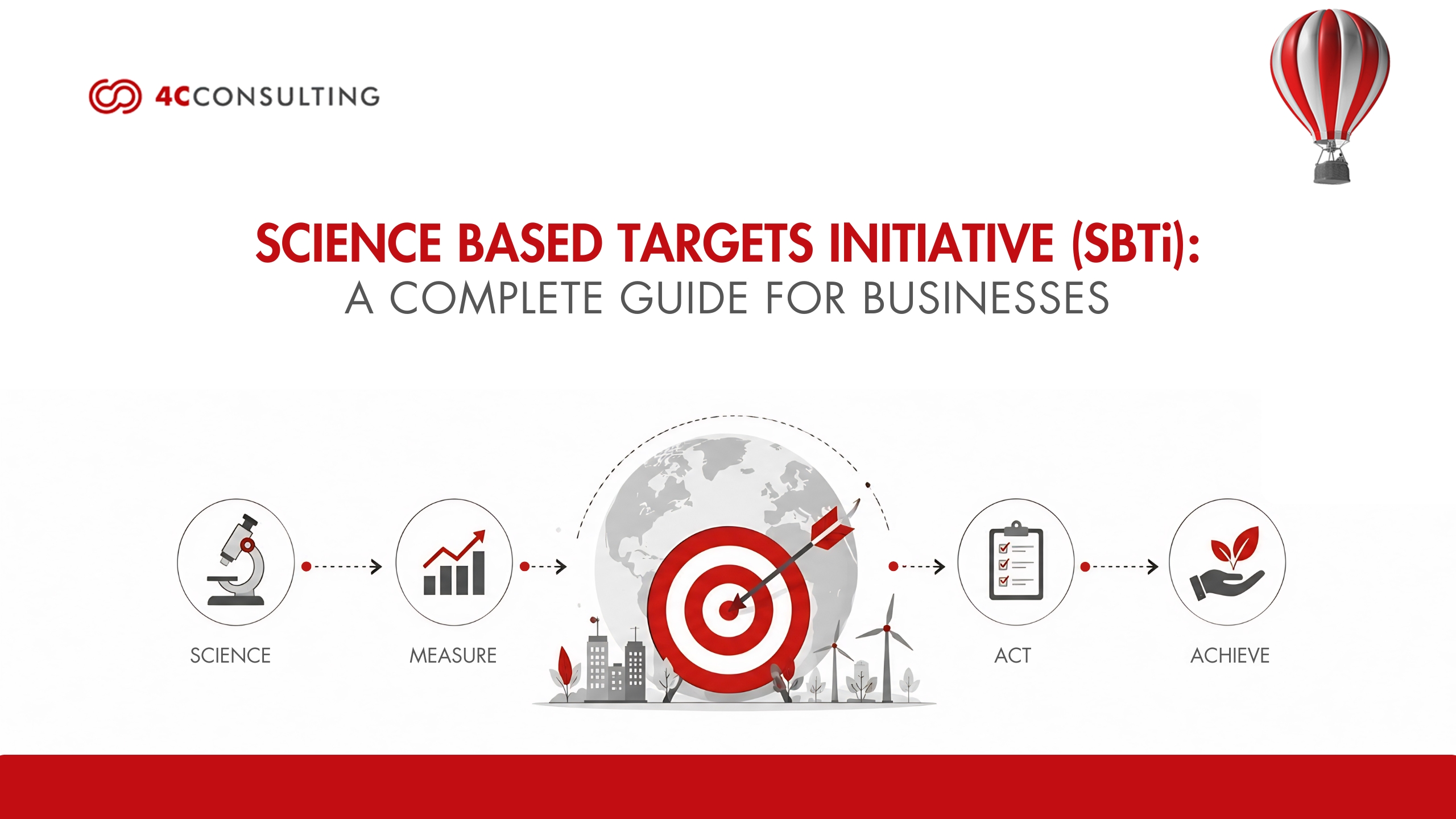
About SBTiFor most Indian companies, the full journey from GHG baseline assessment to officially validated and published SBTi targets takes between 9 and 18 months. The key variables are availability of Scope 3 data, organizational complexity and how quickly your internal team can review and approve targets. Companies that already have an ISO 14001 system or existing GHG inventory can move significantly faster. 4C Consulting's structured process and pre-built data tools help reduce timelines at every stage.
SBTi targets fall into two categories: near-term and long-term. Near-term targets cover the period to 2030 and require at least 50% reduction in Scope 1 and 2 emissions, with Scope 3 targets where applicable. Long-term targets cover the period to 2050 and require 90%+ reduction across all scopes under the SBTi Corporate Net Zero Standard. Within these, companies can choose between absolute targets (reducing total emissions) and intensity targets (reducing emissions per unit of revenue or output), depending on their sector and SBTi pathway eligibility.
SBTi consulting fees in India typically range from ₹3 lakh to ₹15 lakh depending on company size, the number of sites and the complexity of your Scope 3 value chain. In addition, SBTi charges a validation fee directly currently USD 4,950 for large companies, with reduced or zero fees for SMEs. Companies that already have GHG inventory data or BRSR reporting in place will typically have lower consulting costs. 4C Consulting provides a clear, scoped proposal after an initial assessment so you know exactly what is involved before you commit.
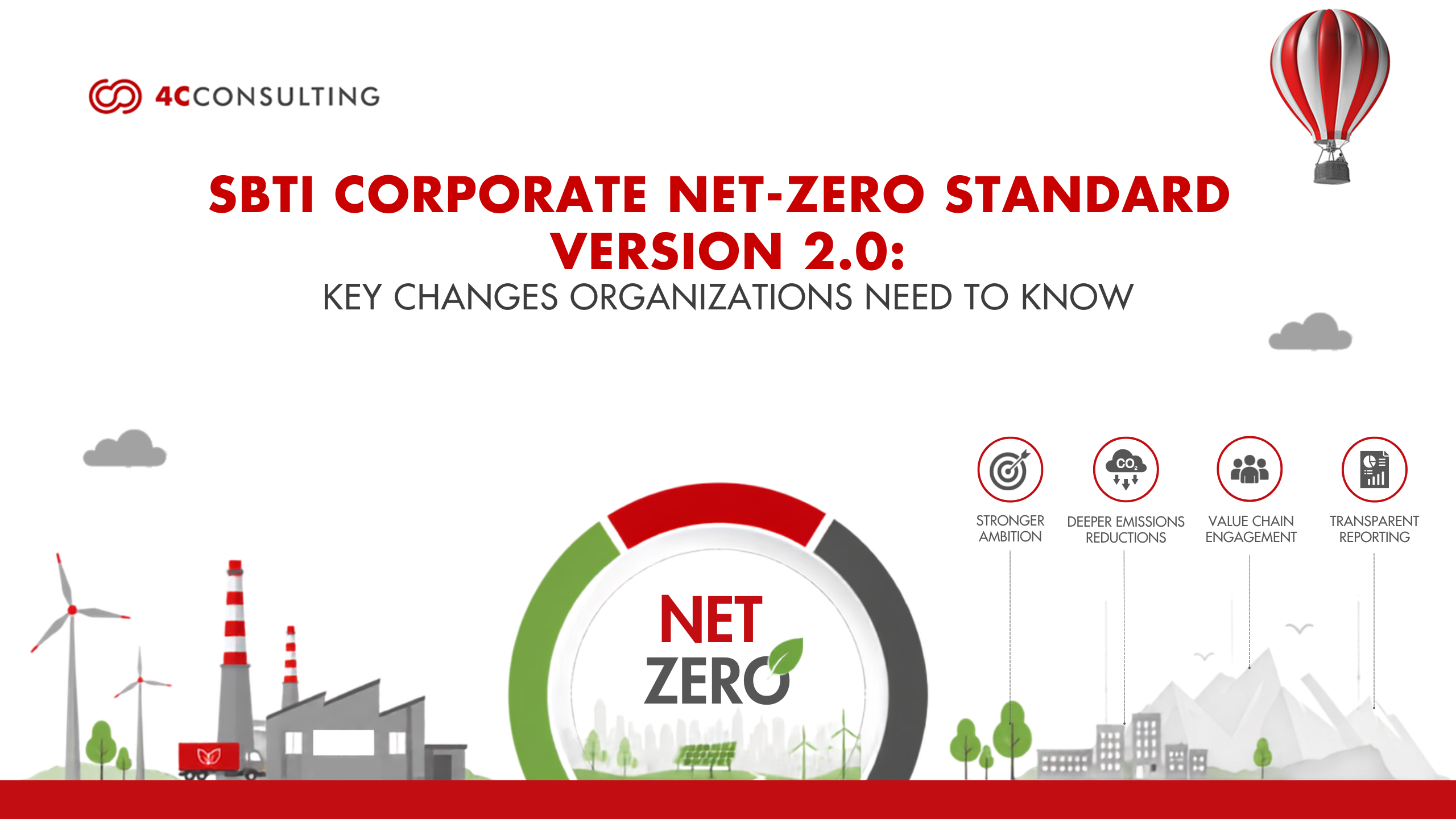
Near-term SBTi targets require companies to achieve at least a 50% reduction in Scope 1 and 2 emissions by 2030, with proportionate Scope 3 targets where Scope 3 is significant. Long-term net zero targets require a 90% or greater reduction across all scopes by 2050, with any residual emissions addressed through permanent carbon removal. Both targets are required under the SBTi Corporate Net Zero Standard and must be submitted together for full validation. 4C Consulting helps you develop and validate both in a single, integrated engagement.
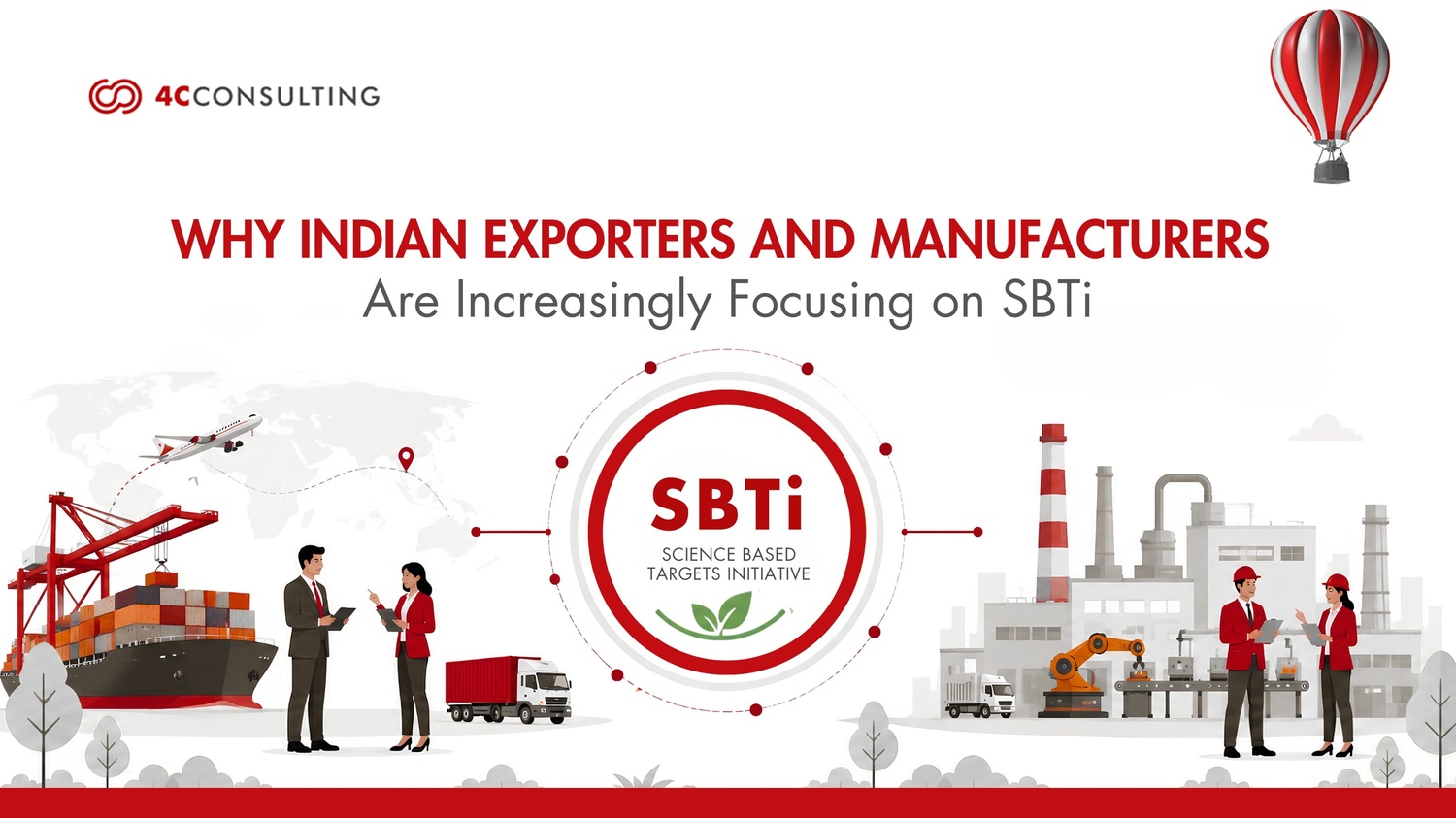
Leading Indian organizations including Tata Group, Infosys and Mahindra Group have publicly committed to science-based targets. The number of Indian SBTi commitments has grown sharply since 2023, driven by export market pressure and ESG investor expectations. Indian manufacturers in textiles, auto components, chemicals and pharma are seeing the fastest growth in SBTi adoption particularly those supplying European brands that have their own validated targets and need to account for Scope 3 supplier emissions.
SBTi adoption delivers both direct and indirect financial benefits. Direct benefits include reduced energy and resource costs from efficiency improvements linked to emission reduction initiatives and avoided CBAM compliance costs for exporters to the EU. Indirect benefits include improved EcoVadis and CDP scores which directly affect contract eligibility with global buyers’ better access to green finance and ESG-linked loans, stronger performance in investor ESG screening and reduced regulatory risk as carbon pricing and climate disclosure requirements expand in India and globally. Companies with validated SBTi targets are consistently better positioned to win and retain international business.