
Table of Contents
- What is the Science Based Targets Initiative (SBTi)?
- Understanding Scope 1, Scope 2, and Scope 3 Emissions
- Why More Businesses Are Moving from Sustainability Claims to Science-Based Targets
- Which Businesses Should Consider SBTi?
- Understanding the SBTi Validation Process
- SBTi Requirements for Businesses
- Common Challenges Businesses Face During SBTi Implementation
- SBTi Benefits for Companies Beyond Compliance
- How 4C Consulting Supports Businesses in SBTi Implementation
- FAQ's
Science-Based Targets Initiative (SBTi): A Complete Guide for Businesses
16th May, 2026
Businesses are under growing pressure to prove their sustainability commitments with measurable climate action rather than broad environmental claims.
Investors are evaluating ESG performance more closely, multinational customers are assessing supplier emissions, and regulators worldwide are increasing expectations around climate transparency. As a result, businesses can no longer rely on broad sustainability claims without clear, science-backed targets.
Many organizations announce carbon reduction goals, but struggle to determine whether those targets are realistic, measurable or aligned with global climate expectations. This is where the Science Based Targets Initiative (SBTi) certification becomes important.
SBTi provides businesses with a structured framework for setting greenhouse gas reduction targets aligned with climate science and global net-zero objectives. As climate expectations continue to evolve, businesses need sustainability strategies that are measurable, credible and aligned with global standards.
What is the Science Based Targets Initiative (SBTi)?
The Science Based Targets Initiative (SBTi) is a global framework that helps businesses set greenhouse gas (GHG) reduction targets aligned with climate science.
It is a joint initiative developed by:
- CDP
- United Nations Global Compact (UNGC)
- World Resources Institute (WRI)
- World Wide Fund for Nature (WWF)
The primary objective of SBTi is to help businesses reduce emissions in line with the goals of the Paris Agreement, particularly to keep global temperature rise below 1.5°C through science-based emission reduction targets. Unlike general sustainability commitments, it focuses on measurable and scientifically validated emission reduction targets.
In simple terms, it helps businesses set measurable carbon reduction targets aligned with global climate goals.
Understanding Scope 1, Scope 2, and Scope 3 Emissions
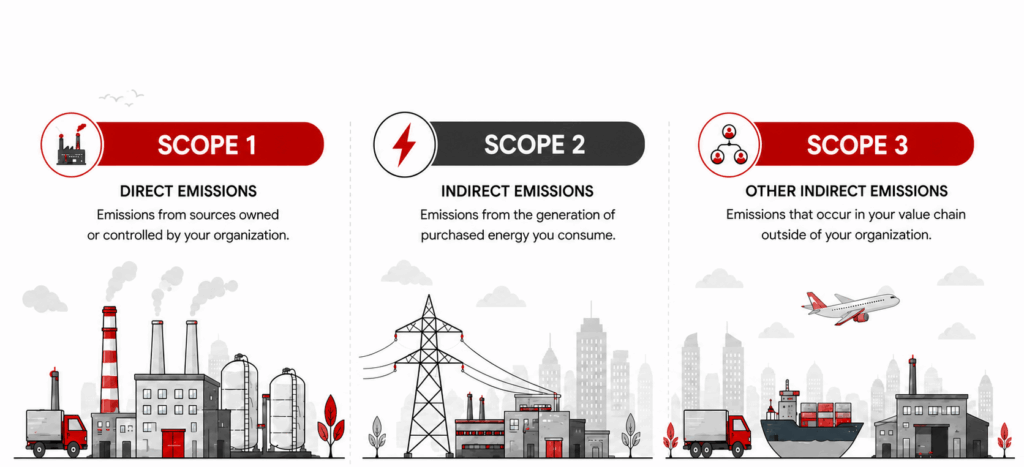
One of the most important aspects of the SBTi guide is understanding emissions categories.
Scope 1 Emissions
Direct emissions generated from company-owned operations, such as:
- fuel combustion
- manufacturing processes
- company vehicles
Scope 2 Emissions
Indirect emissions from purchased electricity, heating or cooling consumed by the business.
Scope 3 Emissions
Indirect emissions across the value chain, including:
- suppliers
- logistics
- business travel
- product usage
- waste disposal
For many organizations, Scope 3 emissions represent the largest and most complex area of emissions management.
Many companies set broad sustainability goals, but science-based targets are more structured and measurable. They are aligned with climate science and externally validated, helping businesses improve transparency, accountability, and long-term sustainability credibility.
Why More Businesses Are Moving from Sustainability Claims to Science-Based Targets
Sustainability is no longer viewed only as a branding initiative. It is increasingly becoming a business performance expectation.
Organizations today are expected to provide measurable sustainability data rather than general environmental commitments.
1. Sustainability Claims Alone Are No Longer Enough
Businesses globally are facing increased scrutiny around greenwashing and unverified environmental claims.
Customers, investors and regulators now expect companies to demonstrate:
- measurable carbon reduction efforts
- transparent reporting
- credible sustainability strategies
Science-based targets help organizations move beyond marketing claims toward structured climate action.
2. Large Buyers Are Evaluating Supplier Emissions
Many multinational companies now assess supplier sustainability performance as part of procurement and vendor evaluation processes.
This means suppliers are increasingly being asked:
- Do you measure emissions?
- Do you have reduction targets?
- Are your sustainability goals validated?
As a result, SBTi for businesses is becoming increasingly important within global supply chains.
3. ESG Expectations Are Influencing Investment Decisions
Investors are increasingly integrating ESG performance into risk evaluation and investment strategies.
Businesses with structured sustainability frameworks often gain stronger investor confidence because they demonstrate long-term operational planning and climate readiness.
4. Carbon Transparency Is Becoming a Competitive Advantage
Organizations that can demonstrate transparent climate action often gain advantages in:
- procurement opportunities
- international partnerships
- investor discussions
- customer trust
- market positioning
This is one reason why SBTi benefits for companies extend far beyond environmental reporting alone.
Which Businesses Should Consider SBTi?
While SBTi is commonly associated with large corporations, it is becoming increasingly relevant for businesses of all sizes.
Manufacturing Companies
SBTi requirements for manufacturing companies are becoming particularly important due to:
- energy-intensive operations
- process emissions
- supply chain pressure
- export market sustainability expectations
Manufacturers supplying global brands are increasingly expected to demonstrate measurable carbon reduction efforts.
SMEs and Growing Businesses
The SBTi SME small business pathway is designed to simplify target-setting for smaller organizations.
Growing businesses are increasingly adopting SBTi because:
- larger clients expect supplier sustainability commitments
- ESG expectations are expanding across industries
- sustainability readiness improves long-term competitiveness
Export-Oriented Businesses
Businesses exporting products internationally may face increasing sustainability expectations linked to:
- European regulations
- global customer requirements
- procurement standards
Science-based targets can strengthen international market readiness.
Large Enterprises with ESG Goals
Large organizations implementing ESG strategies often use SBTi frameworks to support:
- investor reporting
- sustainability commitments
- net-zero strategies
- climate disclosure initiatives
Understanding the SBTi Validation Process
SBTi Validation is not simply about submitting sustainability goals. Businesses must develop measurable, data-driven emission reduction targets that align with climate science and SBTi criteria.
For many organizations, the most challenging part of the process is collecting accurate emissions data and mapping emissions across operations and supply chains. Companies often underestimate the level of coordination, documentation, and technical analysis required during implementation.
1. Commitment Submission
The process usually begins with a formal commitment to develop science-based targets. Businesses register their commitment and begin preparing for emissions assessment and target-setting activities. After registering the commitment, organizations typically get 24 months to develop and submit their emission reduction goals for validation. This stage helps organizations establish internal alignment and define sustainability objectives before moving into technical implementation.
2. Emissions Assessment
The next step involves assessing the company’s greenhouse gas emissions across:
- Scope 1 emissions (direct operational emissions)
- Scope 2 emissions (purchased electricity and energy)
- Scope 3 emissions (supply chain and indirect emissions)
This stage is critical because businesses need accurate baseline emissions data before developing reduction targets. For many companies, Scope 3 emissions become the most complex area due to supplier data collection, logistics activities, procurement operations and value chain dependencies.
Under SBTi requirements, companies are generally expected to include Scope 3 emissions in their target-setting process when these emissions account for 40% or more of total organizational emissions. Even when Scope 3 emissions fall below this threshold, assessing and monitoring them remains an important sustainability best practice.
3. Target Development
Once emissions are assessed, businesses develop emission reduction targets aligned with SBTi methodologies and climate science requirements. These targets are expected to be measurable, time-bound, scientifically aligned, and realistic within the organization’s operational capabilities and long-term sustainability strategy.
Organizations may also need to identify decarbonization opportunities such as:
- energy efficiency improvements
- renewable energy adoption
- process optimization
- supplier engagement initiatives
This stage often requires balancing sustainability goals with operational and financial considerations.
4. Documentation and Submission
After targets are finalized, businesses prepare supporting documentation for SBTi review. This includes:
- emissions calculations
- target methodologies
- boundary definitions
- supporting assumptions
- technical justifications
Accurate documentation is essential because incomplete or inconsistent submissions can delay validation.
5. SBTi Review and Validation
The SBTi team conducts a technical review to evaluate whether submitted targets meet validation criteria and align with climate science methodologies.
During this stage, businesses may receive feedback, clarification requests, or recommendations for adjustments before final approval.
Successful validation confirms that the organization’s targets are scientifically credible and aligned with recognized global climate frameworks.
6. Public Disclosure and Monitoring
Once targets are validated, businesses publicly disclose their science-based targets and begin long-term implementation and monitoring activities.
However, validation is not the final step. Organizations are expected to continuously track emissions performance, monitor progress regularly, maintain transparency in reporting, and update sustainability strategies whenever required. Continuous monitoring helps ensure targets remain achievable and aligned with long-term climate commitments.
SBTi Requirements for Businesses
SBTi requirements can vary depending on the organization’s size, industry, operations, and emissions profile. However, businesses are generally expected to establish structured processes for measuring, managing, and reducing greenhouse gas emissions across their operations and value chains.
Key focus areas often include:
- energy consumption monitoring
- emissions assessment and tracking
- supply chain emissions management
- decarbonization planning
- operational efficiency improvements
- emissions reporting and transparency
Businesses are also expected to set measurable and science-based emission reduction targets aligned with global climate goals. In many cases, organizations need to improve internal data collection, cross-functional coordination, and long-term sustainability planning to successfully implement SBTi-aligned targets.
As sustainability expectations continue to grow globally, science-based targets are becoming increasingly important for businesses aiming to strengthen credibility, improve supply chain positioning, and prepare for evolving ESG and climate-related requirements.
Common Challenges Businesses Face During SBTi Implementation
Implementing science-based targets can be challenging without proper planning and sustainability expertise.
Difficulty Collecting Accurate Emissions Data: Many organizations lack centralized systems for emissions tracking and data collection.
Managing Scope 3 Supply Chain Emissions: Scope 3 emissions often involve suppliers, logistics providers, and external stakeholders, making data collection more complex.
Internal Coordination Across Departments: SBTi implementation requires coordination between multiple departments, including operations, procurement, finance, leadership, and sustainability teams. Without proper collaboration and communication, businesses may experience implementation delays and inconsistent sustainability planning.
Lack of Technical Sustainability Expertise: Many organizations struggle with emissions calculations, target-setting methodologies, reporting frameworks and validation requirements due to limited internal sustainability expertise.
Balancing Sustainability Goals with Operational Costs: Many organizations face concerns about balancing decarbonization investments with operational and financial priorities.
SBTi Benefits for Companies Beyond Compliance
Many businesses initially explore SBTi due to regulatory or customer pressure. However, it benefits for companies extend far beyond compliance requirements.
- Stronger Brand Credibility: it improves sustainability credibility because targets are measurable and externally validated.
- Improved Investor Confidence: Structured climate strategies demonstrate long-term operational planning and ESG maturity.
- Better Supply Chain Positioning: Many global buyers prefer suppliers with measurable sustainability commitments.
- Competitive Advantage in Global Markets: Businesses with validated climate strategies often gain stronger positioning in sustainability-focused markets.
- Operational Efficiency and Cost Reduction: Decarbonization initiatives often help businesses improve energy efficiency, optimize resource usage and enhance overall operational performance. Over time, these improvements can support cost reduction while strengthening long-term sustainability performance.
- Long-Term Sustainability Readiness: SBTi helps organizations prepare for evolving climate regulations and future market expectations.
How 4C Consulting Supports Businesses in SBTi Implementation
At 4C Consulting, we support organizations through every stage of the SBTi implementation journey with a structured and business-focused approach. Our team helps businesses simplify emissions assessment, develop science-based targets, prepare for validation and build practical sustainability roadmaps aligned with global climate expectations.
Our support includes:
- emissions assessment and carbon footprint analysis
- target development guidance
- SBTi validation preparation
- sustainability strategy support
- ESG and sustainability consulting integration
- operational and supply chain sustainability improvement
With 20+ years of consulting experience, 4C Consulting has supported 2000+ clients across multiple industries and contributed to 5000+ successful certification and implementation projects. Our team combines sustainability expertise with practical business understanding to help organizations build credible, measurable and implementation-ready climate strategies.
Partner with 4C Consulting to simplify your SBTi journey with expert support for emissions assessment, target setting, validation preparation, and long-term sustainability planning.
FAQ’s
1. Is SBTi mandatory for businesses?
No, SBTi is not legally mandatory in most countries. However, many businesses adopt it to meet investor, customer, and supply chain sustainability expectations.
2. What is the difference between SBTi and net zero?
SBTi provides scientifically aligned frameworks and validation methodologies for emission reduction targets, while net zero refers to the long-term goal of balancing emitted and removed greenhouse gases.
3. How long does the SBTi validation process take?
The timeline varies depending on business size, emissions complexity, and documentation readiness. The process may take several months from target development to final validation.
4. Can SMEs apply for SBTi validation?
Yes. The SBTi SME small business pathway is specifically designed to simplify implementation for small and medium-sized businesses.
5. What is Scope 1, Scope 2, and Scope 3 emissions?
Scope 1 includes direct operational emissions, Scope 2 covers purchased energy emissions, and Scope 3 includes indirect value chain emissions.
6. How much does SBTi validation cost?
SBTi validation costs depend on factors such as company size, emissions complexity, and implementation scope.
7. Is SBTi applicable for manufacturing companies?
Yes. SBTi requirements for manufacturing companies are highly relevant due to operational emissions, supply chain expectations, and increasing sustainability regulations.
8. Does SBTi provide certification?
SBTi validates emission reduction targets but does not provide ISO-style certifications.
9. Why do companies hire an SBTi consultant?
Businesses often work with an SBTi consultant for emissions assessment, target development, validation support, and sustainability strategy planning.
10. Can startups adopt SBTi targets?
Yes. Startups and growing businesses can adopt science-based targets to strengthen sustainability positioning and prepare for future ESG expectations.

Shardul Patel
Founder & CEOShardul Patel is the Founder and CEO of 4C Consulting, with expertise spanning management systems, ISO standards, emerging standards, and organizational improvement. He brings a broad understanding of evolving compliance and business requirements, helping organizations navigate new standards and strengthen their management frameworks. His leadership focuses on delivering practical consulting solutions that support compliance, continual improvement, and long-term business growth.