
Table of Contents
- What Is Sustainable Procurement?
- What Is ISO 20400 and How Does It Support Sustainable Procurement?
- Key Principles of Sustainable Procurement Under ISO 20400
- How to Implement Sustainable Procurement Across Your Supply Chain
- Benefits of Sustainable Procurement for Businesses
- How 4C Consulting Can Help Build a Responsible Supply Chain
- FAQ’s
Sustainable Procurement with ISO 20400: Building a Responsible Supply Chain
17th Nov, 2026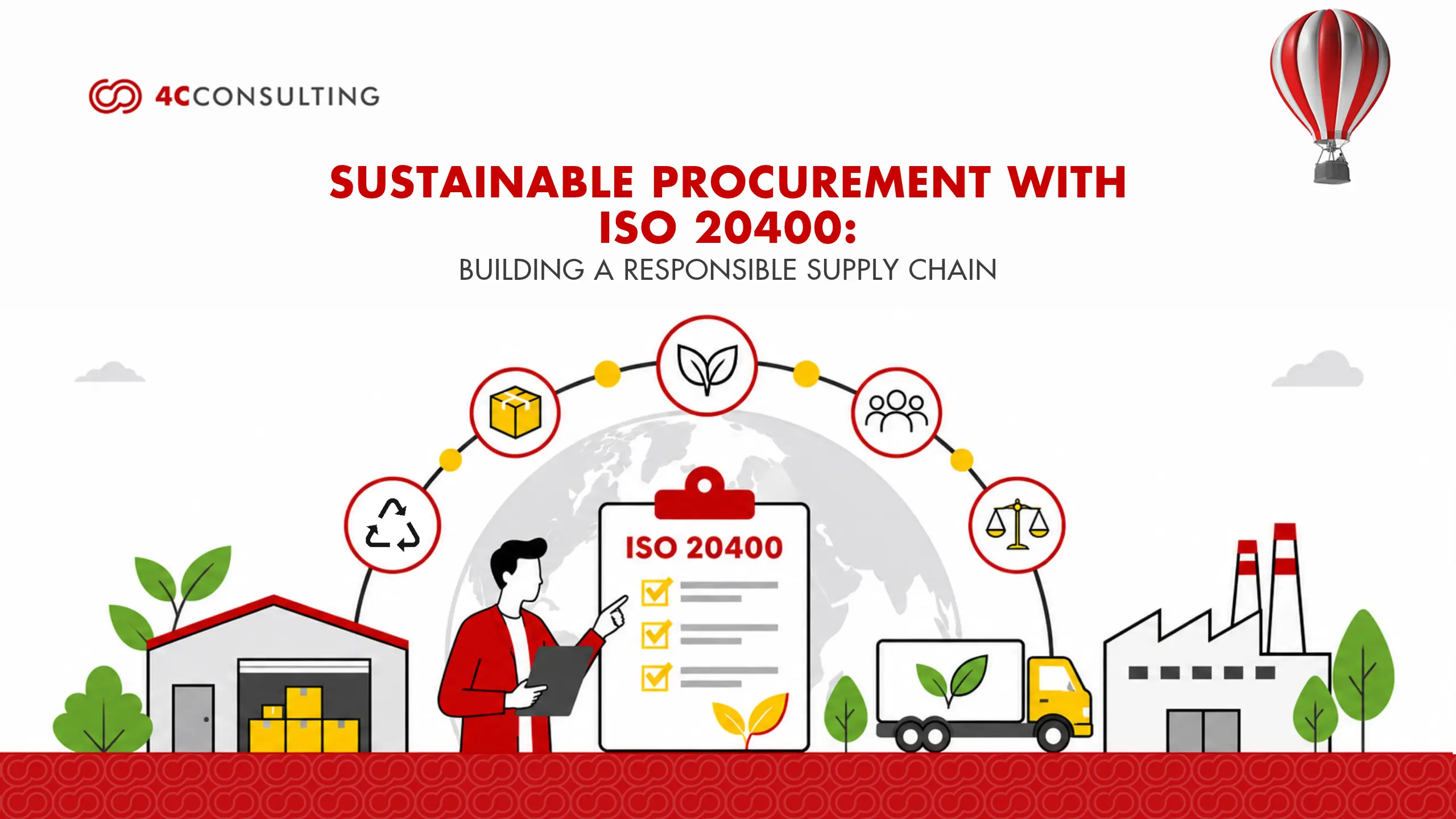
A supply chain is only as responsible as the decisions made throughout it. Sustainable procurement is becoming an important business priority as organizations look beyond purchasing costs to evaluate environmental impact, supplier practices and long-term business risks.
For businesses, this means procurement can no longer focus only on price, quality and delivery timelines. Organizations must also consider how products are sourced, how suppliers treat their employees, how resources are used and whether business partners follow responsible practices.
This is where sustainable procurement with ISO 20400 becomes important. The standard provides guidance for integrating sustainability into procurement policies, supplier relationships and purchasing processes. It helps organizations move beyond short-term purchasing decisions and build supply chains that support responsible business practices.
In this article, we explore how organizations can apply ISO 20400 principles, evaluate suppliers and integrate sustainability into procurement decisions to develop a more responsible supply chain.
What Is Sustainable Procurement?
Sustainable procurement is the process of purchasing goods and services while considering their environmental, social and economic impacts throughout their life cycle. Unlike conventional procurement, which often prioritizes purchase price, product quality and delivery, sustainable procurement considers the wider consequences of sourcing decisions.
For example, a manufacturing company purchasing packaging materials may evaluate more than the supplier’s quoted price. It may also consider:
- Whether the materials contain recycled or responsibly sourced content.
- The energy and water consumed during manufacturing.
- Whether workers receive fair wages and work under safe conditions.
- The supplier’s waste management and environmental practices.
- Transportation distance and associated emissions.
- Opportunities to reuse, recycle or recover materials after use.
This broader evaluation helps businesses understand the actual value and impact of their purchasing decisions.
Sustainable procurement also encourages organizations to work with suppliers, contractors and other business partners to improve sustainability performance across the supply chain.
What Is ISO 20400 and How Does It Support Sustainable Procurement?
ISO 20400:2017 – Sustainable Procurement Guidance is an international standard that helps organizations integrate sustainability considerations into their procurement decisions and processes. It provides guidance for organizations of all sizes and sectors, including public and private businesses, to make purchasing decisions that consider environmental, social and economic impacts.
Aligned with the social responsibility principles outlined in ISO 26000, ISO 20400 encourages organizations to look beyond purchase price, quality and delivery requirements. It helps them consider responsible sourcing, supplier practices, resource efficiency and the wider impact of procurement activities across the supply chain.
The guidance is structured around four key areas:
1. Fundamentals of Sustainable Procurement
This area establishes the foundation for responsible purchasing. It explains the principles, drivers and key considerations of sustainable procurement, helping organizations understand their responsibilities and identify sustainability issues relevant to their supply chains.
2. Policy and Strategy
Effective sustainable procurement starts with a clear organizational commitment. This area guides businesses in developing procurement policies, setting sustainability objectives and aligning purchasing strategies with their broader business and sustainability goals.
3. Organizing the Procurement Function
Integrating sustainability into procurement requires defined responsibilities and organizational support. This area focuses on establishing appropriate governance, building employee awareness and competence, engaging stakeholders, and ensuring that procurement teams have the resources and processes needed to apply sustainability considerations consistently.
4. Integrating Sustainability into the Procurement Process
This area focuses on translating procurement commitments into everyday purchasing decisions. It covers how organizations can incorporate sustainability considerations into procurement planning, specifications, supplier selection, contract management and performance evaluation.
Together, these four areas help organizations move from sustainability commitments to practical procurement activities, making responsible sourcing an integral part of supply chain management.
Important: ISO 20400 is a guidance standard, not a certifiable management system standard. It provides recommendations for improving sustainable procurement practices, but organizations cannot obtain an accredited ISO 20400 certification.
Key Principles of Sustainable Procurement Under ISO 20400
ISO 20400 draws on the social responsibility principles of ISO 26000. These principles help organizations make procurement decisions that consider business interests as well as their responsibilities towards people, society and the environment.
The key principles include:
- Accountability: Organizations should take responsibility for the environmental, social and economic impacts of their procurement decisions. This includes understanding how purchasing practices affect suppliers, workers, communities and natural resources.
- Transparency: Procurement decisions, supplier selection criteria and business practices should be clear and accessible to relevant stakeholders. Transparent processes help reduce conflicts of interest and strengthen trust.
- Ethical Behaviour: Organizations should maintain ethical conduct throughout procurement activities. This includes preventing bribery, corruption, unfair competition and other unethical practices.
- Respect for Stakeholder Interests: Procurement decisions should consider the legitimate interests of employees, suppliers, customers, local communities and other affected stakeholders.
- Respect for Human Rights: Businesses should consider human rights risks throughout their supply chains. This includes issues such as forced labour, child labour, discrimination and unsafe working conditions.
- Respect for the Rule of Law and International Norms: Organizations should comply with applicable laws and consider internationally recognized standards of behaviour when evaluating their procurement practices and supplier relationships. These principles provide the foundation for responsible sourcing and help organizations establish procurement practices that support long-term sustainability.
How to Implement Sustainable Procurement Across Your Supply Chain
Integrating sustainability into procurement requires a systematic approach. Organizations need to understand their current purchasing practices, identify significant supply chain risks and establish clear criteria for supplier evaluation.
The following steps can help businesses apply ISO 20400 guidance in practice.
1. Establish a Sustainable Procurement Policy
Start by developing a policy that explains the organization’s commitment to responsible sourcing and sustainable purchasing.
The policy should connect procurement activities with broader business objectives, including environmental management, social responsibility, ethical business practices and supply chain resilience.
It should also define:
- Sustainability expectations for purchasing decisions.
- Roles and responsibilities of procurement teams.
- Environmental and social priorities.
- Supplier conduct and evaluation expectations.
- Methods for monitoring procurement performance.
For example, a manufacturing organization may introduce a procurement policy that prioritizes suppliers with effective environmental controls, safe working conditions and transparent business practices. A clear policy gives procurement teams a consistent basis for making purchasing decisions.
2. Identify Sustainability Risks Across the Supply Chain
Supplier-related risks can affect an organization’s environmental performance, reputation, business continuity and regulatory compliance. Therefore, organizations should understand where significant sustainability risks may exist across their supply chains.
Common areas to assess include:
- Environmental risks: Excessive energy consumption, water pollution, hazardous waste generation and high greenhouse gas emissions.
- Social risks: Unsafe working conditions, unfair wages, forced labour and child labour.
- Governance risks: Corruption, conflicts of interest, poor business ethics and lack of transparency.
- Operational risks: Supplier dependency, material shortages, inadequate quality controls and disruptions in delivery.
Risk assessment should consider the nature of purchased goods and services, supplier locations, supply chain complexity and the potential severity of impacts. This helps businesses prioritize suppliers and procurement categories that require closer attention.
3. Integrate Sustainability Criteria into Supplier Selection
Supplier selection is one of the most important stages of sustainable procurement. Organizations should evaluate suppliers using criteria that go beyond cost, quality and delivery performance.
Depending on the purchased product or service, relevant sustainability criteria may include:
| Evaluation Area | What Organizations Can Assess |
|---|---|
| Environmental Performance | Waste management, energy efficiency, water consumption and emission reduction practices |
| Social Responsibility | Worker safety, labour practices, human rights and employee welfare |
| Ethical Business Practices | Anti-bribery policies, transparency and responsible business conduct |
| Resource Management | Recycled materials, responsible sourcing and efficient resource utilization |
| Management Systems | Relevant environmental, quality and occupational health and safety management practices |
However, identifying evaluation criteria is only the first step. Organizations also need measurable indicators to assess supplier performance consistently and track improvements over time.
Examples of measurable supplier sustainability indicators include:
- Suppliers assessed against environmental criteria: Percentage of active suppliers evaluated for their environmental practices.
- Supplier energy data availability: Percentage of relevant suppliers that provide verified or documented energy consumption information.
- Suppliers with documented labour policies: Percentage of suppliers that maintain documented policies covering labour practices, worker welfare and human rights.
- Procurement spends covered by responsible sourcing requirements: Percentage of total procurement expenditure associated with suppliers or purchases that meet defined responsible sourcing criteria.
For example, an automotive manufacturer sourcing metal components may evaluate suppliers based on material traceability, energy management, waste handling and occupational health and safety practices. It can also track how many suppliers provide environmental data and how much of its procurement spend is covered by responsible sourcing requirements.
The objective is not to select suppliers based on sustainability claims alone. Organizations should request supporting evidence, review relevant documentation and assess whether suppliers can meet the defined requirements. This makes supplier evaluation more transparent, consistent and measurable.
4. Consider Life Cycle Costing in Purchasing Decisions
The lowest purchase price does not always represent the best long-term value. Life cycle costing helps organizations evaluate the costs associated with a product or service throughout its useful life rather than considering only its initial purchase price.
These costs may include:
- Purchase and installation expenses.
- Energy and water consumption.
- Maintenance and repair costs.
- Transportation and storage.
- Operating expenses.
- Disposal, recycling or end-of-life management.
For example, a company choosing between two industrial machines may find that one option has a lower purchase price but consumes more electricity and requires frequent maintenance. Another machine may cost more initially but offer better energy efficiency, lower maintenance requirements and a longer operating life.
Considering these factors helps organizations make purchasing decisions based on long-term value while supporting resource efficiency and environmental objectives.
5. Engage Suppliers in Sustainability Improvements
Sustainable procurement cannot succeed through supplier evaluation alone. Organizations must also work with suppliers to improve their sustainability practices.
Supplier engagement can involve:
- Communicating sustainability expectations during onboarding.
- Sharing supplier codes of conduct.
- Conducting supplier awareness sessions.
- Requesting relevant environmental and social performance data.
- Reviewing supplier sustainability improvement plans.
- Encouraging corrective actions where gaps are identified.
For example, a manufacturer may identify that a key supplier has limited systems for monitoring waste generation. Instead of immediately replacing the supplier, the purchasing organization can communicate its expectations and work together on an improvement plan.
This approach encourages collaboration and helps suppliers strengthen their capabilities over time.
6. Include Sustainability Requirements in Contracts
Supplier expectations should not remain limited to procurement policies or initial evaluations. They should also be reflected in relevant purchasing agreements and contract management processes.
Depending on the nature of the purchase, contractual requirements may address:
- Compliance with applicable environmental and labour laws.
- Workplace health and safety practices.
- Responsible sourcing of raw materials.
- Restrictions on prohibited labour practices.
- Environmental performance information and reporting.
- Supplier audits, reviews and corrective actions.
- Requirements for managing subcontractors.
Clear contractual expectations help both parties understand their responsibilities and provide a basis for monitoring supplier performance.
7. Monitor Supplier Performance and Improve Continuously
Regular supplier performance reviews help organizations determine whether sustainability requirements are being met and identify areas that need improvement.
For example, an organization may monitor supplier performance using indicators such as:
- Supplier assessment coverage: Percentage of active suppliers assessed against defined sustainability criteria.
- High-risk supplier assessment rate: Percentage of identified high-risk suppliers that have undergone a sustainability assessment.
- Corrective action closure rate: Percentage of supplier corrective actions completed within the agreed timeframe.
- Responsible sourcing coverage: Percentage of total procurement spend meeting the organization’s responsible sourcing requirements.
- Supplier environmental data coverage: Percentage of relevant suppliers providing environmental performance information.
- Supplier improvement progress: Number or percentage of suppliers demonstrating measurable improvement against agreed sustainability targets.
These indicators help organizations evaluate supplier performance, identify gaps and review the effectiveness of their sustainable procurement practices.
Benefits of Sustainable Procurement for Businesses
Adopting sustainable procurement practices can create value beyond environmental responsibility. It can also strengthen supplier relationships, improve risk management and support long-term business performance.
- Better Supply Chain Risk Management: Evaluating environmental, social and governance risks helps organizations identify potential supplier issues before they affect business operations. This supports better preparedness and more informed sourcing decisions.
- Improved Supplier Relationships: Clear sustainability expectations and regular communication encourage suppliers to understand business requirements and work towards shared improvement objectives.
- Greater Resource Efficiency: Considering energy, water, materials, transportation and waste throughout the procurement life cycle can help organizations identify opportunities to reduce resource consumption and associated costs.
- Stronger ESG Performance: Procurement decisions influence several aspects of environmental, social and governance performance. Integrating sustainability into supplier selection and contract management can strengthen the evidence supporting an organization’s ESG initiatives.
- Enhanced Stakeholder Confidence: Customers, investors, employees and business partners increasingly expect organizations to demonstrate responsible business practices. Transparent and consistent procurement processes can strengthen credibility and trust.
- Long-Term Supply Chain Resilience: Working with responsible and capable suppliers helps organizations build stronger supplier relationships, understand potential vulnerabilities and improve their ability to respond to supply chain disruptions.
How 4C Consulting Can Help Build a Responsible Supply Chain
4C Consulting helps businesses strengthen their responsible sourcing practices through ISO 20400 sustainable procurement guidance and sustainability consulting. With over 20 years of consulting experience, our team supports organizations in developing practical approaches to responsible procurement and supply chain sustainability.
Our support includes:
- ISO 20400 gap assessment and implementation guidance.
- Sustainable procurement policy and strategy development.
- Supplier sustainability risk assessment.
- Integration of environmental and social evaluation criteria.
- Supplier engagement and awareness initiatives.
- Procurement performance monitoring and improvement guidance.
By connecting sustainable procurement with broader ESG and management system objectives, we help organizations build more transparent, responsible and resilient supply chains.
Looking to integrate sustainability into your procurement strategy?
Connect with 4C Consulting to discuss your sustainable procurement with ISO 20400 requirements and explore the right approach for your organization.
FAQ’s
1. What is the primary purpose of ISO 20400?
The primary purpose of ISO 20400:2017 is to help organizations integrate sustainability into their procurement policies, strategies and processes. It guides them to consider the environmental, social and economic impacts of purchasing decisions, and to manage supplier relationships responsibly across the supply chain.
2. Is ISO 20400 applicable to small and medium-sized businesses?
Yes. ISO 20400 provides guidance for organizations of all sizes and sectors. Small and medium-sized businesses can adapt its recommendations according to their procurement activities, supplier relationships, resources and sustainability priorities.
3. What is the difference between sustainable procurement and green procurement?
Green procurement mainly focuses on reducing the environmental impact of purchased goods and services. Sustainable procurement has a broader scope, considering environmental, social and economic impacts throughout the procurement life cycle.
4. How can organizations evaluate supplier sustainability performance?
Organizations can evaluate suppliers through sustainability questionnaires, documentation reviews, site assessments, supplier audits and performance indicators. Assessment criteria may cover environmental management, labour practices, human rights, ethical conduct and resource efficiency.
5. Does ISO 20400 require suppliers to have ISO 14001 certification?
No. ISO 20400 does not make ISO 14001 certification a mandatory supplier requirement. Organizations can use relevant environmental management certifications as one source of evidence when evaluating suppliers, depending on their procurement criteria and risk profile.
6. How does sustainable procurement support ESG reporting?
Sustainable procurement helps organizations collect information about supplier environmental performance, labour practices, responsible sourcing and ethical business conduct. This information can support supply chain-related ESG disclosures and strengthen the evidence behind sustainability reporting.
7. What should organizations include in a sustainable procurement policy?
A sustainable procurement policy should define the organization’s sustainability commitments, procurement responsibilities, supplier evaluation criteria, environmental and social priorities, and methods for monitoring supplier performance. It should also align purchasing decisions with broader business and sustainability objectives.

Shardul Patel
Founder & CEOShardul Patel is the Founder and CEO of 4C Consulting, with expertise spanning management systems, ISO standards, emerging standards, and organizational improvement. He brings a broad understanding of evolving compliance and business requirements, helping organizations navigate new standards and strengthen their management frameworks. His leadership focuses on delivering practical consulting solutions that support compliance, continual improvement, and long-term business growth.