
Table of Contents
- What Is FAMI-QS Certification?
- Why Was FAMI-QS Developed?
- Who Needs FAMI-QS Certification?
- Why Is FAMI-QS Certification Important?
- Key Requirements of the FAMI-QS Standard
- Benefits of FAMI-QS Certification
- Ready to Strengthen Feed Safety and Expand into Global Markets?
- FAMI-QS Certification Process
- Common Challenges Feed Manufacturers Face During FAMI-QS Implementation
- How 4C Consulting Helps You Achieve FAMI-QS Certification
- Frequently Asked Questions (FAQs)
What Is FAMI-QS Certification? A Complete Guide for Feed Manufacturers
24th Jul, 2026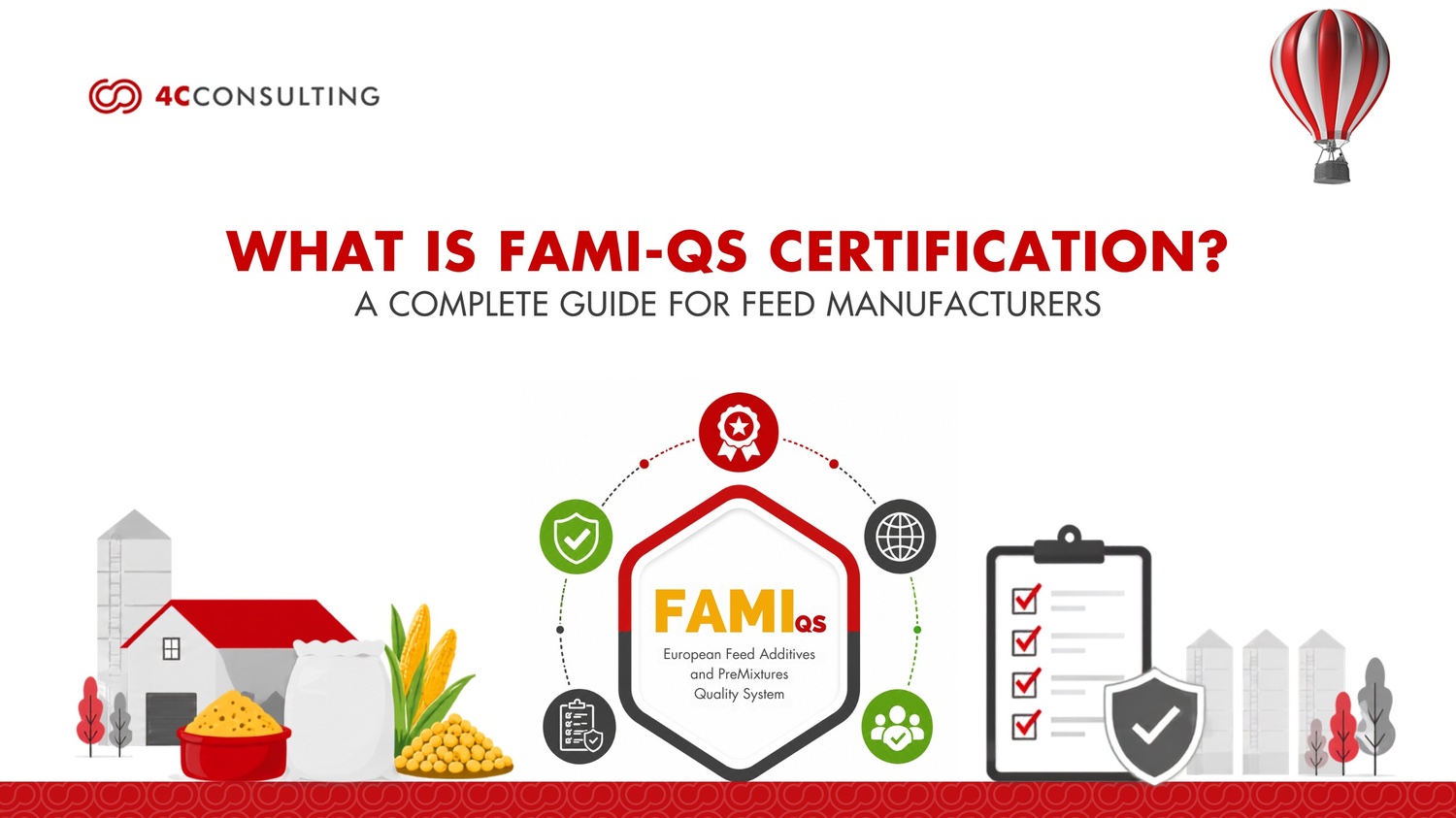
As global feed supply chains become more complex, ensuring the safety and quality of feed ingredients has become a critical priority for manufacturers. Regulatory compliance alone is no longer enough, as customers across the EU, Asia-Pacific, and North America increasingly expect suppliers to operate under a recognized feed safety management system.
Developed by the European Feed Additives and Premixtures Quality System Association (FAMI-QS), FAMI-QS has become the global benchmark for manufacturers of specialty feed ingredients and premixtures. In this guide, you’ll learn what FAMI-QS Certification is, who needs it, its key requirements, the certification process, and the benefits it offers.
What Is FAMI-QS Certification?
FAMI-QS short for Feed Additives and Premixtures Quality System is an internationally recognised feed safety and quality management standard developed exclusively for manufacturers and distributors of specialty feed ingredients and premixtures. Developed by FEFANA (the European Feed Additives and Premixtures Association), it combines Good Manufacturing Practices (GMP), HACCP-based risk management and traceability controls into a single certification framework.
Unlike general quality standards, FAMI-QS is built specifically for the feed industry. It is recognised by feed manufacturers, livestock producers and regulatory authorities worldwide and for many international buyers, it is a non-negotiable supplier requirement.
Why Was FAMI-QS Developed?
The feed industry plays a critical role in the global food chain. Any contamination or quality issue in feed ingredients can affect animal health, food safety and ultimately human health.
To address these risks, the FAMI-QS Standard was developed to provide a harmonized feed safety management system that helps organizations:
- Produce safe and high-quality feed ingredients.
- Prevent contamination throughout the supply chain.
- Meet international regulatory requirements.
- Improve traceability and product integrity.
- Strengthen customer confidence.
- Promote continuous improvement in feed safety management.
Over time, FAMI-QS has evolved into one of the globally recognized certification schemes for specialty feed ingredient manufacturers operating in domestic and international markets.
Who Needs FAMI-QS Certification?
Although FAMI-QS Certification is primarily designed for manufacturers of specialty feed ingredients and mixtures, it is also valuable for organizations involved in the feed supply chain that want to demonstrate their commitment to feed safety and responsible manufacturing.
Organizations that commonly implement the FAMI-QS Standard include:
- Feed additive manufacturers
- Premix manufacturers
- Manufacturers of specialty feed ingredients
- Feed ingredient distributors
- Traders and importers
- Exporters of feed additives
- Contract manufacturers
- Companies involved in storage and handling of specialty feed ingredients
For these organizations, implementing FAMI-QS Certification not only improves feed safety but also enhances credibility with customers, regulators and certification bodies.
Why Is FAMI-QS Certification Important?
As global feed supply chains become more complex, manufacturers are under increasing pressure to ensure product safety, maintain regulatory compliance and demonstrate responsible manufacturing practices.
Implementing the FAMI-QS Standard helps organizations establish a systematic approach to feed safety while reducing operational risks and strengthening market credibility.
Some of the key reasons why FAMI-QS Certification has become increasingly important include:
- Ensures consistent production of safe feed ingredients.
- Supports compliance with international feed safety regulations.
- Strengthens risk management through HACCP-based controls.
- Improves traceability across the supply chain.
- Enhances supplier qualification and raw material control.
- Builds confidence among customers and regulatory authorities.
- Facilitates access to international markets.
- Demonstrates a commitment to continuous improvement.
For exporters, FAMI-QS Certification is often more than a compliance requirement it is a competitive advantage that helps build trust with global customers and supports long-term business growth.
Key Requirements of the FAMI-QS Standard
The FAMI-QS Standard provides a structured framework for managing feed safety risks throughout the production and supply chain. Rather than focusing only on product testing, it requires organizations to establish preventive controls, documented procedures and management systems that ensure feed additives and premixtures are consistently manufactured under safe and controlled conditions.
Below are the key requirements organizations must implement to achieve FAMI-QS Certification.
1. Feed Safety Management System (FSMS)
A Feed Safety Management System (FSMS) forms the foundation of the FAMI-QS Standard. Organizations must establish documented policies, objectives and procedures to identify, control and continuously improve feed safety risks.
The management system should define clear responsibilities, allocate resources and ensure feed safety is integrated into daily operations rather than treated as a standalone activity.
2. HACCP and Risk Assessment
The FAMI-QS Standard requires organizations to implement a Hazard Analysis and Critical Control Points (HACCP) system to identify and control potential hazards throughout the manufacturing process.
This includes evaluating:
- Biological hazards
- Chemical hazards
- Physical hazards
- Feed fraud risks
- Cross-contamination risks
- Allergen risks (where applicable)
By applying preventive controls instead of relying solely on final product testing, organizations can significantly reduce feed safety risks.
3. Good Manufacturing Practices (GMP)
Good Manufacturing Practices (GMP) ensure products are consistently manufactured under controlled conditions. The standard requires organizations to establish procedures that maintain product quality, hygiene and process consistency.
Key GMP requirements include:
- Facility cleanliness and hygiene
- Equipment maintenance
- Pest control
- Personnel hygiene
- Production controls
- Cleaning and sanitation procedures
- Storage and handling practices
Strong GMP implementation minimizes contamination risks and supports consistent product quality.
4. Supplier Qualification and Raw Material Control
Feed safety begins with the quality of incoming raw materials. Organizations must establish a structured supplier approval and monitoring process to ensure purchased materials meet defined safety and quality requirements.
Typical activities include:
- Supplier evaluation and approval
- Raw material specifications
- Supplier performance monitoring
- Incoming material inspections
- Risk-based supplier assessments
Effective supplier management helps reduce risks throughout the supply chain.
5. Product Traceability and Recall
The ability to quickly trace products throughout the supply chain is a critical requirement of FAMI-QS Certification.
Organizations should establish systems that enable them to:
- Trace raw materials to finished products
- Identify affected batches
- Maintain production records
- Conduct product recall exercises
- Respond effectively to feed safety incidents
A robust traceability system improves customer confidence and supports regulatory compliance.
6. Change Management
Changes to raw materials, suppliers, equipment, manufacturing processes or formulations can introduce new feed safety risks. The FAMI-QS Standard requires organizations to assess and control these risks before implementing operational changes.
A structured change management process should evaluate the potential impact of changes and ensure appropriate approvals, validation and documentation are completed.
7. Documentation and Record Control
Documented information provides evidence that the feed safety management system is effectively implemented.
Organizations are expected to maintain:
- Policies and procedures
- Work instructions
- Production records
- Inspection reports
- Calibration records
- Training records
- Supplier documentation
- Corrective action records
Proper document control ensures information remains accurate, current and readily available during a FAMI-QS audit.
8. Internal Audits
Regular internal audits help organizations evaluate whether the management system is operating effectively and complying with the FAMI-QS Standard.
Internal audits should:
- Verify implementation of documented procedures.
- Identify improvement opportunities.
- Detect non-conformities before certification audits.
- Monitor the effectiveness of corrective actions.
Conducting internal audits regularly helps maintain certification readiness throughout the year.
9. Management Review and Continual Improvement
Top management plays an essential role in maintaining the effectiveness of the Feed Safety Management System.
Management reviews should evaluate:
- Audit findings
- Customer feedback
- Feed safety objectives
- Process performance
- Corrective actions
- Resource requirements
- Opportunities for continual improvement
This ensures feed safety remains aligned with business objectives and changing regulatory or customer requirements.
Benefits of FAMI-QS Certification
Implementing FAMI-QS delivers benefits that extend beyond regulatory compliance. It helps organizations strengthen feed safety, improve operational efficiency and enhance credibility with customers across domestic and international markets.
1. Improves Feed Safety
The FAMI-QS Standard provides a preventive approach to managing feed safety risks through HACCP, GMP and structured operational controls. This reduces the likelihood of contamination and improves product consistency.
2. Supports International Market Access
Many global feed manufacturers and multinational companies prefer or require suppliers to implement recognized feed safety management systems. It helps organizations meet these expectations and strengthens their position in international markets.
3. Enhances Customer Confidence
Certification demonstrates that your organization follows internationally recognized feed safety practices, giving customers greater confidence in your products and manufacturing processes.
4. Strengthens Regulatory Compliance
FAMI-QS aligns with international feed safety regulations and industry best practices, helping organizations maintain compliance while reducing regulatory risks.
5. Improves Supplier Management
The standard promotes a risk-based approach to supplier qualification and raw material control, helping organizations improve supply chain reliability and product quality.
6. Reduces Product Recall Risks
Through improved traceability, preventive controls and effective risk management, organizations can identify potential issues early and minimize the likelihood of costly product recalls.
7. Drives Operational Efficiency
Implementing standardized procedures, better documentation and systematic process controls improves operational consistency while reducing errors, waste and process variation.
8. Creates a Competitive Advantage
For manufacturers and exporters, FAMI-QS demonstrates a strong commitment to feed safety and quality, helping differentiate the organization from competitors and supporting long-term business growth.
Ready to Strengthen Feed Safety and Expand into Global Markets?
FAMI-QS Certification Process
Achieving FAMI-QS Certification requires a structured approach that combines feed safety management, risk assessment, documentation and continuous improvement. Rather than treating certification as a one-time audit, organizations should focus on implementing a robust management system that consistently meets the requirements of the FAMI-QS Standard.
Below is the typical FAMI-QS certification process followed by most feed additive and premixture manufacturers.
Step 1: Conduct a Gap Assessment
The first step is to compare your existing feed safety management practices with the requirements of the FAMI-QS Standard.
A gap assessment helps organizations:
- Evaluate current management systems.
- Identify areas of non-compliance.
- Prioritize improvement actions.
- Develop an implementation roadmap.
Starting with a gap assessment reduces implementation delays and helps organizations prepare more efficiently for certification.
Step 2: Provide FAMI-QS Training
Successful implementation begins with knowledgeable employees. FAMI-QS training helps management, supervisors and operational teams understand the standard’s requirements and their responsibilities in maintaining feed safety.
Training typically covers:
- FAMI-QS Standard requirements
- Feed safety principles
- HACCP implementation
- Good Manufacturing Practices (GMP)
- Documentation requirements
- Internal auditing
- Risk assessment
Well-trained employees contribute significantly to successful implementation and long-term compliance.
Step 3: Develop Documentation
Documentation provides evidence that the Feed Safety Management System has been established and implemented effectively.
Organizations should prepare documents such as:
- Feed Safety Policy
- Standard Operating Procedures (SOPs)
- HACCP Plan
- Risk Assessment Records
- Supplier Approval Procedures
- Traceability Procedures
- Product Recall Procedure
- Training Records
- Internal Audit Program
Well-organized documentation simplifies the certification audit and supports ongoing compliance.
Step 4: Implement the FAMI-QS Standard
Once documentation is developed, organizations should implement the procedures across all relevant departments.
Implementation includes:
- Applying operational controls.
- Monitoring Critical Control Points (CCPs).
- Managing supplier approvals.
- Maintaining production records.
- Improving traceability.
- Conducting routine inspections.
This phase ensures that documented procedures become part of everyday operations rather than existing only on paper.
Step 5: Conduct Internal Audits
Before the certification audit, organizations should perform internal audits to verify that the management system is functioning effectively.
Internal audits help to:
- Verify compliance with the FAMI-QS Standard.
- Identify non-conformities.
- Evaluate process effectiveness.
- Assess employee awareness.
- Confirm documentation accuracy.
Corrective actions should be implemented for any issues identified during the internal audit.
Step 6: Certification Audit
The certification body conducts the FAMI-QS audit to evaluate whether the organization complies with the requirements of the standard.
During the audit, auditors typically:
- Review documented information.
- Inspect manufacturing facilities.
- Verify GMP implementation.
- Evaluate HACCP controls.
- Interview employees.
- Review production and traceability records.
The audit determines whether the organization’s Feed Safety Management System has been effectively implemented.
Step 7: Address Corrective Actions
If non-conformities are identified during the audit, the organization must implement corrective actions within the agreed timeframe.
Corrective actions may involve:
- Updating procedures.
- Improving documentation.
- Strengthening operational controls.
- Providing additional employee training.
- Improving risk management practices.
Once corrective actions are accepted, the certification process moves toward completion.
Step 8: Achieve Certification and Maintain Continual Improvement
After successfully completing the audit and closing any non-conformities, the organization is awarded FAMI-QS Certification.
However, certification is not the end of the journey. Organizations should continuously:
- Monitor feed safety performance.
- Conduct internal audits.
- Review management system effectiveness.
- Update HACCP studies.
- Improve supplier management.
- Prepare for surveillance audits.
Continual improvement ensures the Feed Safety Management System remains effective and aligned with changing regulatory and customer requirements.
Common Challenges Feed Manufacturers Face During FAMI-QS Implementation
Although the FAMI-QS Standard provides a structured framework for feed safety management, many organizations face practical challenges during implementation. Addressing these issues early can help streamline the certification process and improve audit readiness.
1. Understanding FAMI-QS Requirements
Interpreting the standard and applying its requirements to specific products, manufacturing processes and business operations can be challenging, particularly for organizations implementing FAMI-QS for the first time.
2. Conducting HACCP and Feed Safety Risk Assessments
Identifying potential feed safety hazards, evaluating risks and establishing effective preventive controls requires technical knowledge and a thorough understanding of manufacturing processes.
3. Developing Practical Documentation
Creating documentation that meets FAMI-QS requirements while accurately reflecting day-to-day operations can be time-consuming and difficult without a structured approach.
4. Ensuring Consistent Implementation
Many organizations struggle to ensure that documented procedures are consistently followed across production, quality, procurement, warehouse and other operational functions.
5. Preparing for the Certification Audit
Organizations often face challenges in maintaining complete records, closing non-conformities, demonstrating effective implementation and ensuring employees are prepared for auditor interviews.
How 4C Consulting Helps You Achieve FAMI-QS Certification
4C Consulting brings over 20 years of experience in helping organizations implement internationally recognized management systems and achieve successful certification. Our expert consultants work closely with feed manufacturers to simplify FAMI-QS implementation, strengthen feed safety management systems and ensure compliance with international certification requirements.
Whether you’re pursuing FAMI-QS Certification for the first time or preparing for a certification audit, we help identify compliance gaps, develop practical implementation strategies and improve your organization’s audit readiness.
Speak with our experts to assess your current readiness, identify implementation gaps and develop a practical roadmap toward successful FAMI-QS Certification.
Frequently Asked Questions (FAQs)
1. Is FAMI-QS recognized outside Europe?
Yes. Although FAMI-QS was developed in Europe, it is widely recognized by feed manufacturers, multinational companies and buyers across Asia, North America, Latin America and other global markets. Many international customers require FAMI-QS Certification as part of their supplier qualification process, making it valuable for organizations involved in global trade.
2. Is ISO 22000 enough, or do I also need FAMI-QS?
ISO 22000 provides a general Food Safety Management System applicable across the food supply chain. However, it does not address the specific requirements of specialty feed additives and premixtures. If your customers or target markets require compliance with feed industry-specific standards, FAMI-QS Certification is often necessary in addition to ISO 22000.
3. How much does FAMI-QS Certification cost?
The cost of FAMI-QS Certification depends on several factors, including the size of the organization, the complexity of operations, the number of manufacturing sites and the certification body’s fees. Additional costs may include implementation support, employee training and internal audits. Organizations should obtain quotations from accredited certification bodies and experienced consultants for an accurate estimate.
4. How often are surveillance audits conducted?
After achieving FAMI-QS Certification, organizations are required to undergo periodic surveillance audits to verify that the Feed Safety Management System continues to meet the standard’s requirements. These audits are typically conducted annually, with recertification required at the end of the certification cycle to maintain certification.
5. Is FAMI-QS Certification mandatory?
No. FAMI-QS Certification is generally voluntary. However, many international customers, feed manufacturers and multinational companies require suppliers to be FAMI-QS certified as part of their supplier qualification process.
6. What is included in a FAMI-QS audit?
A FAMI-QS audit evaluates whether an organization complies with the requirements of the FAMI-QS Standard. Auditors typically review:
- Feed Safety Management System
- HACCP implementation
- Good Manufacturing Practices (GMP)
- Supplier management
- Product traceability
- Documentation and records
- Employee competence and training
- Internal audits and management reviews
7. How long does it take to achieve FAMI-QS Certification?
The implementation timeline varies depending on the organization’s size, existing management systems and operational complexity. Most organizations complete implementation and certification within 3 to 6 months, although timelines may differ based on preparedness and available resources.

Sachin Mohan
General ManagerSachin Mohan is a General Manager at 4C Consulting with expertise in Food Standards, ISO 9001, ISO 14001, ISO 45001, SEDEX, and SA 8000. He supports organizations in strengthening management systems, improving compliance, and aligning business processes with recognized quality, environmental, health & safety, and social responsibility standards. His expertise helps businesses build structured systems that support responsible operations and continual improvement.