
Table of Contents
- The Connection Between SBTi, ESG Compliance and Net Zero Targets
- Why SBTi Is Becoming Important for Indian Manufacturers and Exporters
- Ready to set science-based targets and accelerate your sustainability journey?
- Key Benefits of SBTi for Manufacturers
- Key Benefits of SBTi for Exporters
- Common Challenges Indian Manufacturers and Exporters Face When Implementing SBTi
- Getting Started with SBTi: A Step-by-Step Approach
- Why Partnering with Sustainability Experts Can Accelerate SBTi Success
- How 4C Consulting Supports Indian Manufacturers and Exporters on Their SBTi Journey
- Frequently Asked Questions (FAQs)
Why Indian Exporters and Manufacturers Are Increasingly Focusing on Science Based Targets initiative (SBTi)
12th Jun, 2026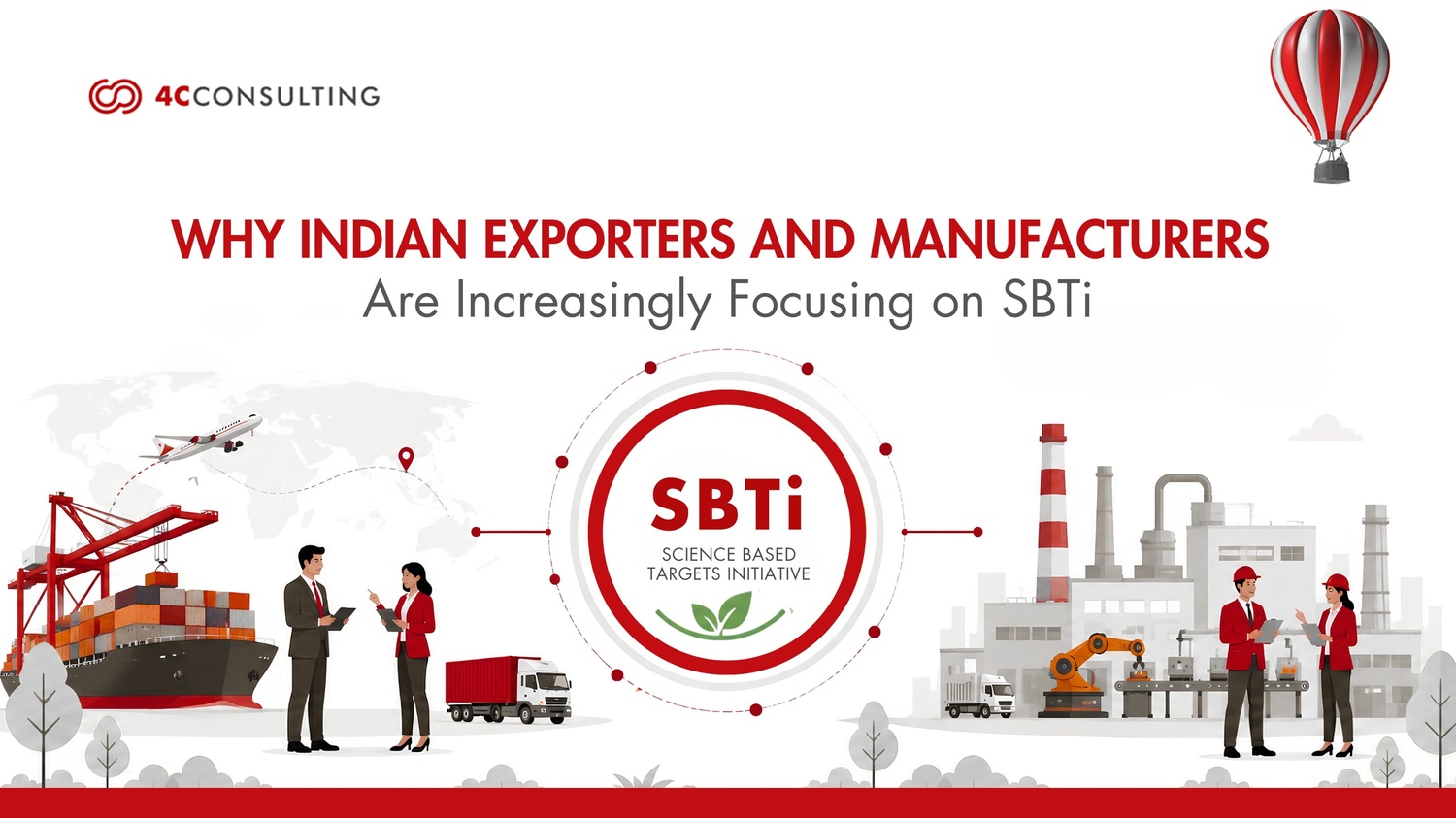
Sustainability is no longer just a corporate responsibility initiative; it has become a key business consideration in global trade. As climate regulations evolve and frameworks like the EU’s Carbon Border Adjustment Mechanism (CBAM) gain momentum, international buyers, investors and stakeholders are paying closer attention to the environmental performance of their suppliers.
For Indian exporters and manufacturers, this shift is becoming increasingly significant. More than 10,000 companies and financial institutions globally, including over 290 in India, have set SBTi targets, representing more than 40% of global market capitalization. (Source – outlook business.com, esgpro.in, global-agriculture.com) Adoption is growing across key export-driven sectors such as IT, manufacturing, power, cement, metals, pharmaceuticals and textiles, highlighting the increasing importance of science-based climate action.
This is where the Science Based Targets initiative (SBTi) comes in. By providing a scientifically validated framework for setting and achieving emissions reduction targets, SBTi helps organizations strengthen ESG performance, support net zero ambitions and enhance their credibility in global markets. In this blog, we explore why SBTi for manufacturers and SBTi for exporters is gaining momentum, the key benefits it offers and how organizations can begin their science-based sustainability journey.
The Connection Between SBTi, ESG Compliance and Net Zero Targets
As sustainability expectations continue to grow, organizations are increasingly using SBTi to align their carbon reduction efforts with ESG requirements and long-term net zero commitments.
How SBTi Supports ESG Strategies
SBTi serves as a practical tool for strengthening environmental performance within ESG frameworks. It enables organizations to:
- Measure emissions consistently
- Track sustainability progress
- Improve reporting accuracy
- Enhance ESG disclosures
These capabilities support stronger ESG performance, improve stakeholder confidence and help organizations meet growing ESG reporting expectations.
The Role of SBTi in Achieving Net Zero Targets
Many organizations have announced ambitious net zero targets but achieving these goals requires a structured and credible roadmap.
SBTi provides that roadmap by establishing science-based pathways that guide organizations toward long-term decarbonization. By setting measurable emission reduction targets and tracking progress over time, businesses can align their sustainability objectives with global climate expectations while maintaining operational growth.
Why SBTi Is Becoming Important for Indian Manufacturers and Exporters
Growing sustainability expectations, evolving regulations and increasing ESG requirements are reshaping global trade. As a result, Indian manufacturers and exporters are turning to SBTi to demonstrate credible climate action, strengthen market competitiveness and meet stakeholder expectations.
1. Increasing Sustainability Expectations from Global Customers
International buyers are placing sustainability requirements at the centre of procurement decisions. Many multinational corporations have already committed to reducing emissions across their entire value chains and are expecting suppliers to support those goals.
As a result, Indian exporters are increasingly receiving requests related to:
- Carbon footprint disclosures
- Climate risk management
- Sustainability performance reporting
- Emission reduction commitments
Companies that can demonstrate progress through recognized frameworks such as Science Based Targets initiative (SBTi) often gain a competitive advantage during supplier evaluations.
2. Rising ESG Compliance Requirements
Environmental, Social and Governance (ESG) considerations are influencing investment decisions and corporate partnerships worldwide.
Businesses seeking access to international markets, financing opportunities and strategic partnerships are finding that strong ESG performance is becoming a key requirement.
SBTi supports ESG compliance by providing a structured and measurable approach to climate action, helping organizations strengthen sustainability disclosures and reporting practices.
3. Preparing for Global Climate Regulations
Governments around the world are introducing stricter climate-related regulations and reporting requirements. Carbon-related regulations are becoming increasingly relevant for exporters serving international markets.
Organizations that proactively establish science-based targets are better positioned to:
- Manage regulatory risks
- Meet future reporting requirements
- Adapt to evolving market expectations
- Maintain long-term competitiveness
4. Supporting Supply Chain Decarbonization
As organizations work toward their own climate goals, they are increasingly focusing on reducing emissions across their value chains. This has created a growing expectation for suppliers to measure, manage and reduce their carbon footprint.
SBTi helps manufacturers and exporters align with broader supply chain decarbonization efforts, enabling them to remain preferred partners for customers that are pursuing ambitious sustainability and net zero commitments.
As sustainability expectations continue to evolve, adopting SBTi is becoming more than just a response to market and regulatory pressures. It is also creating significant opportunities for organizations to improve operational performance, strengthen stakeholder trust and enhance their competitive position. Understanding these advantages can help manufacturers and exporters realize the broader business value of science-based climate action.
Ready to set science-based targets and accelerate your sustainability journey?
Key Benefits of SBTi for Manufacturers
For manufacturers, SBTi offers more than just a framework for reducing emissions. It helps organizations improve operational efficiency, strengthen sustainability performance, meet stakeholder expectations and build long-term business resilience in an increasingly climate-conscious market.
1. Supports Sustainable Manufacturing Practices
Manufacturing operations often contribute significantly to energy consumption and greenhouse gas emissions. SBTi encourages organizations to identify emission-intensive activities and implement improvements that support sustainable manufacturing practices.
This often leads to:
- Better resource utilization
- Reduced energy consumption
- Improved operational efficiency
- Lower environmental impact
2. Helps Achieve Carbon Reduction Goals
One of the biggest advantages of Science Based Targets initiative (SBTi) is that it provides a clear framework for achieving meaningful carbon reduction goals.
Organizations gain:
- Defined emissions reduction pathways
- Measurable performance indicators
- Accountability mechanisms
- Continuous improvement opportunities
Instead of relying on broad sustainability commitments, businesses can focus on measurable outcomes.
3. Strengthens Brand Reputation and Market Position
Customers, investors and stakeholders increasingly prefer organizations that demonstrate genuine environmental responsibility.
Adopting SBTi can help businesses:
- Build trust with customers
- Improve stakeholder confidence
- Enhance corporate credibility
- Differentiate themselves from competitors
A strong sustainability reputation can become a significant business advantage in both domestic and international markets.
4. Drives Innovation and Operational Excellence
The process of reducing emissions often encourages organizations to rethink traditional operations and invest in innovative solutions.
This may include:
- Cleaner technologies
- Renewable energy integration
- Process optimization initiatives
- Smart manufacturing systems
These improvements frequently deliver both environmental and financial benefits.
Key Benefits of SBTi for Exporters
For exporters, SBTi offers more than just a framework for emissions reduction. It helps organizations meet customer expectations, strengthen supply chain sustainability, improve market access and build a competitive advantage in an increasingly sustainability-focused global marketplace.
1. Helps Meet International Buyer Requirements
Many global corporations now include sustainability criteria within supplier qualification and vendor assessment programs. SBTi helps exporters demonstrate a credible commitment to climate action and meet growing customer expectations related to:
- Carbon emissions
- Sustainability initiatives
- Climate-related risks
- Environmental management practices
This can strengthen supplier relationships and improve opportunities with international buyers.
2. Strengthens Supply Chain Sustainability
As organizations focus on reducing emissions across their value chains, suppliers are increasingly expected to contribute to broader sustainability objectives.
SBTi helps exporters improve supply chain sustainability by encouraging collaboration with suppliers, logistics providers and business partners to identify and reduce emissions throughout the value chain. This supports customer requirements while building more resilient and sustainable supply networks.
3. Enhances Access to Global Markets
Many international markets and procurement programs now prioritize suppliers with strong sustainability credentials.
Organizations that adopt Science Based Targets initiative (SBTi) can benefit from:
- Improved market access
- Greater customer confidence
- Increased participation in sustainable procurement initiatives
- Enhanced competitiveness in environmentally conscious markets
4. Supports Long-Term Export Competitiveness
Global sustainability expectations continue to evolve, making climate performance an increasingly important factor in supplier selection. By adopting SBTi, exporters can proactively align with emerging market requirements, strengthen their reputation and position themselves for long-term growth in international markets.
Common Challenges Indian Manufacturers and Exporters Face When Implementing SBTi
While the benefits of SBTi are significant, the implementation process can present several challenges for both manufacturers and exporters. From emissions measurement and supply chain engagement to resource constraints, organizations often need to overcome technical, operational and strategic barriers to successfully establish and achieve science-based targets.
1. Emissions Data Collection and Measurement
Many organizations struggle to gather accurate greenhouse gas emissions data, particularly when measuring Scope 3 emissions across complex operations and supply chains.
Common challenges include:
- Incomplete data availability
- Limited monitoring systems
- Inconsistent reporting methodologies
Without reliable emissions data, it can be difficult to establish realistic targets and effectively track progress.
2. Supply Chain Engagement
For both manufacturers and exporters, obtaining sustainability data from suppliers and business partners can be challenging. Suppliers may be at different stages of their sustainability journey, making it difficult to collect consistent emissions information across the value chain.
Organizations often need to invest significant effort in supplier engagement, collaboration and awareness-building to improve data quality and support broader sustainability objectives.
3. Resource and Expertise Constraints
Implementing SBTi requires technical expertise in greenhouse gas accounting, emissions measurement, target setting and sustainability reporting.
Many organizations, particularly small and medium-sized businesses, may lack the internal resources needed to manage the process effectively. As a result, they often seek external support to accelerate implementation, ensure alignment with SBTi requirements and achieve more reliable outcomes.
Getting Started with SBTi: A Step-by-Step Approach
Implementing SBTi may seem complex but a structured approach can help organizations establish achievable climate targets and build a clear pathway toward long-term sustainability. The following steps provide a practical starting point for manufacturers and exporters looking to align their business strategies with science-based climate action.
1. Assess Current Emissions:
The first step involves conducting a comprehensive greenhouse gas inventory to understand current emissions across operations and value chains.
2. Define Carbon Reduction Goals:
Organizations should establish realistic and science-based emissions reduction targets aligned with their business strategy and growth plans.
3. Develop a Decarbonization Roadmap:
Organizations should create a structured action plan outlining the initiatives required to achieve their science-based targets. This may include energy efficiency improvements, renewable energy adoption, sustainable procurement practices and other low-carbon operational measures to reduce emissions over time.
4. Submit Targets for Validation:
Once targets are developed, they can be submitted to SBTi for review and validation. Organizations should also establish systems for ongoing monitoring and reporting.
Why Partnering with Sustainability Experts Can Accelerate SBTi Success
Implementing SBTi successfully requires technical expertise, strategic planning and accurate emissions measurement. Sustainability consultants bring specialized knowledge and practical experience that can help organizations streamline the process and avoid common implementation challenges.
Professional support can help organizations:
- Accelerate implementation timelines
- Improve data accuracy
- Develop realistic climate targets
- Strengthen sustainability reporting
- Ensure alignment with SBTi targets and requirement
By leveraging expert guidance, businesses can focus on achieving meaningful sustainability outcomes while ensuring their targets remain credible, measurable and aligned with global best practices. Through professional SBTi consulting, organizations can gain the strategic direction needed to develop science-based targets, build effective decarbonization roadmaps and support long-term sustainability goals.
At 4C Consulting, we understand the complexities involved in setting and achieving science-based targets. Our team works closely with organizations to simplify the process, support their SBTi net zero journey and help transform sustainability commitments into measurable business outcomes
How 4C Consulting Supports Indian Manufacturers and Exporters on Their SBTi Journey
At 4C Consulting, we help organizations transform sustainability commitments into measurable business outcomes. Many businesses begin their sustainability journey through customer requirements such as EcoVadis assessments, carbon footprint disclosures and sustainable procurement initiatives. As sustainability expectations evolve, SBTi often becomes the next logical step toward building a credible climate strategy.
Our team of experienced sustainability consultants, ESG advisors, trainers and auditors works closely with organizations to develop practical climate strategies aligned with business goals and stakeholder expectations. As a Leading SBTi consultant, we help businesses navigate science-based target setting, emissions reduction planning and sustainability reporting.
Our experience and industry reach are reflected in the results we have delivered:
- 3,000+ successful client engagements completed
- 18+ states served across India
- 15,000+ professional training hours delivered
- 50+ certification body partnerships and associations
Our expertise extends across carbon footprint assessment, SBTi consulting, ESG advisory, net zero strategy development, sustainable procurement, supply chain sustainability and sustainability reporting.
Partner with 4C Consulting to build a credible sustainability roadmap, strengthen ESG performance and create long-term value for your business.
Frequently Asked Questions (FAQs)
1. What is SBTi and why is it important for manufacturers?
SBTi is a global framework that helps organizations set scientifically validated greenhouse gas reduction targets. For manufacturers, it provides a structured approach to reducing emissions, improving operational efficiency and meeting customer sustainability expectations.
2. How does SBTi help exporters remain competitive in global markets?
SBTi demonstrates a credible commitment to climate action, helping exporters satisfy sustainability requirements from international buyers and improve access to environmentally conscious markets.
3. Is SBTi mandatory for Indian exporters?
No, SBTi is currently voluntary. However, many global customers increasingly prefer suppliers that have established science-based climate targets.
4. How does SBTi support ESG compliance initiatives?
SBTi provides measurable emissions reduction targets and transparent reporting frameworks that strengthen environmental performance within broader ESG strategies.
5. What are the first steps to set science-based targets?
Organizations should begin by measuring their greenhouse gas emissions, identifying major emission sources and establishing a baseline before setting reduction targets.
6. How long does it take to achieve SBTi validation?
The timeline varies depending on organizational readiness, data availability and target complexity. Many companies complete the process within several months after submitting targets.
7. What is the difference between carbon reduction goals and net zero targets?
Carbon reduction goals focus on lowering emissions over a specific period, while net zero targets involve reducing emissions as much as possible and neutralizing any remaining emissions.
8. Can small and medium-sized manufacturers adopt SBTi?
Yes. SBTi provides pathways for organizations of different sizes, including SMEs that want to improve sustainability performance and meet customer expectations.

Shardul Patel
Founder & CEOShardul Patel is the Founder and CEO of 4C Consulting, with expertise spanning management systems, ISO standards, emerging standards, and organizational improvement. He brings a broad understanding of evolving compliance and business requirements, helping organizations navigate new standards and strengthen their management frameworks. His leadership focuses on delivering practical consulting solutions that support compliance, continual improvement, and long-term business growth.