
Table of Contents
Common Challenges During RC 14001 Implementation and How to Overcome Them
21st Aug, 2026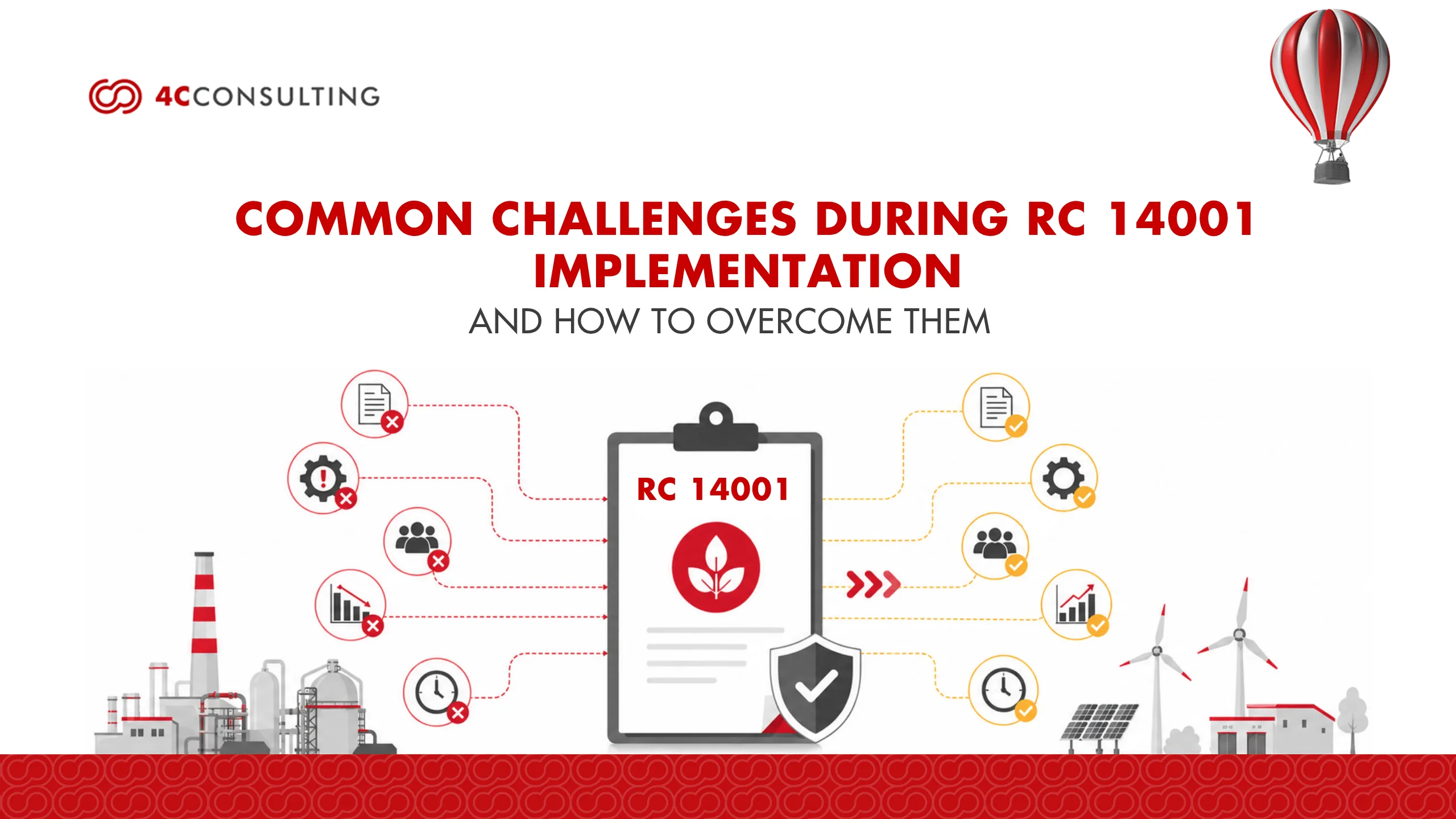
Implementing RC 14001 can be more demanding than implementing a conventional environmental management system. The reason is simple: organizations have to bring ISO 14001-based environmental management together with the wider expectations of Responsible Care.
For chemical-sector organizations, this means looking beyond environmental aspects and considering how the management system supports areas such as operational safety, product and process safety, security, distribution, emergency preparedness and other applicable Responsible Care expectations. RC14001 is designed as a combined certification route rather than two completely separate systems.
That broader scope can create practical challenges during implementation. Teams may struggle with requirement interpretation, system integration, employee involvement, documentation, internal audits or demonstrating that controls are actually working.
This guide looks at the key obstacles and practical ways to address them before the RC 14001 certification audit.
8 Common Challenges During RC 14001 Implementation
Although the right implementation approach can simplify the transition, organizations often encounter practical issues when they begin aligning existing systems with RC 14001. The following are some of the most common challenges that can affect implementation and certification readiness.
1. Existing Processes vs. RC 14001 Requirements
Most organizations already have environmental, safety, quality and operational procedures before starting RC 14001 implementation. However, these existing processes rarely map completely to the applicable RC 14001 requirements.
For example, an organization may have a detailed emergency response plan, but it may not address all the applicable process safety, security or other Responsible Care considerations. Similarly, an ISO 14001-based risk assessment may focus heavily on environmental aspects without fully connecting related product, process or distribution risks.
The challenge is therefore not always the absence of a process. It is identifying where an existing process falls short of the wider RC 14001 expectations.
2. Managing Multiple Standards Without Creating Duplicate Systems
Chemical and process manufacturing organizations often operate ISO 9001, ISO 14001, ISO 45001 and other EHS or operational systems. Adding RC 14001 as another standalone system can create unnecessary duplication.
This can result in multiple document structures, overlapping risk assessments, separate audit schedules, repeated training programmes and different corrective-action records addressing similar issues.
The challenge is maintaining the specific requirements of RC 14001 while avoiding a management system that becomes unnecessarily complex for employees and process owners.
3. Bringing EHS, Process Safety and Security Risks Together
Environmental, health, safety, process safety and security responsibilities are often distributed across different departments. Each function may have its own assessment methods, controls, records and reporting structure. This can create gaps at the points where these risks overlap.
For example, a chemical containment failure can have environmental consequences while also indicating a process safety weakness and potentially creating security or emergency-response concerns. When departments assess such events independently, management may not get a complete view of the risk.
4. Documentation vs. Operational Reality
A documented procedure can appear fully compliant while actual implementation varies from one department or site to another. A procedure may define a control, but employees may interpret the requirement differently, monitoring may not happen at the specified frequency or the required escalation process may not be followed when a deviation occurs.
This creates a significant difference between what the RC 14001 documentation says should happen and what actually happens during operations.
5. Role-Specific Responsibilities Are Not Clearly Understood
RC 14001 implementation extends beyond the EHS function. Production, maintenance, logistics, procurement, security, quality, technical teams and management may all have responsibilities within the system. A general awareness programme may explain the purpose of RC 14001 without making individual responsibilities clear.
As a result, employees may understand the standard at a high level but remain uncertain about the controls they own, records they need to maintain or actions expected from them when an issue occurs.
6. Inconsistent Records and Audit Evidence
Organizations may have effective processes but still struggle to demonstrate consistent implementation through records. One department may maintain detailed and traceable evidence, while another may have incomplete records, outdated formats or corrective actions without documented effectiveness checks.
For RC 14001 certification, this inconsistency can become a significant issue because auditors need evidence that applicable processes are implemented and maintained across the organization, not only that procedures have been documented.
7. Internal Audits Do Not Reflect Actual Implementation
Another challenge is relying heavily on document-based internal audits. An internal audit may confirm that procedures exist and records are available without checking whether employees actually follow the defined process or whether operational controls work as intended.
This can leave important gaps undiscovered until the external certification audit. A strong RC 14001 audit checklist therefore needs to reflect both management-system requirements and actual workplace implementation.
8. Maintaining Momentum After Certification
The implementation effort often receives significant attention before certification, but maintaining the same level of focus afterward can be difficult.
Corrective actions may take longer to close, performance indicators may not receive regular review, refresher training may be delayed and management reviews may gradually become more focused on compliance than actual performance.
Over time, the RC 14001 management system can become audit-driven rather than remaining an active part of everyday operational management.
How to Overcome RC 14001 Implementation Challenges
Overcoming RC 14001 implementation challenges requires more than creating new procedures. The focus should be on connecting requirements with existing processes, assigning clear ownership, building employee competence and verifying that controls work in practice. A structured approach can help organizations move from gap identification to a management system that is ready for certification and sustainable after the audit.
1. Start with a Detailed Gap Assessment
Begin by comparing the organization’s existing management systems and operational practices with the applicable RC 14001 requirements. Review environmental management, EHS&S controls, process safety, security, product-related responsibilities, emergency preparedness and other applicable areas.
Classify findings into three categories: already covered, partially covered and not addressed. This makes it easier to prioritize actions instead of trying to change everything at once.
2. Map Requirements to Existing Processes
Once gaps are identified, connect each requirement to the process where it will actually be implemented. Avoid creating a new procedure when an existing process can be strengthened to address the requirement.
A practical mapping can include the requirement, applicable process, process owner, control, required evidence and review method. This also makes future internal audits more structured.
3. Establish Cross-Functional Ownership
RC 14001 should not be managed solely by the EHS team. Assign responsibilities across functions based on the organization’s activities.
Production may own operational controls, logistics may manage applicable distribution requirements, security may oversee relevant security controls, while management remains responsible for overall system performance and resources. Clear ownership prevents requirements from becoming “everyone’s responsibility” and, ultimately, nobody’s responsibility.
4. Build Role-Based Competence Through Training
Develop an RC 14001 training programme based on actual responsibilities rather than providing the same content to every employee.
Start with management and process owners, followed by function-specific awareness for employees whose work affects applicable requirements. Internal auditors should receive additional training on audit criteria, evidence evaluation, interviewing and reporting.
Training effectiveness should also be evaluated through practical checks, employee interaction or workplace observation not simply attendance records.
Ready to Strengthen Your RC 14001 Management System?
5. Convert Requirements into Measurable Controls
A requirement becomes meaningful only when it is translated into an activity that can be performed and verified.
For important controls, define what needs to happen, who performs it, how often it is checked, what evidence is retained and what happens when the expected result is not achieved. This approach helps close the gap between documented procedures and actual operational performance.
6. Strengthen Evidence and Record Management
Before the certification audit, review whether every important process has sufficient and traceable evidence. Create an evidence register covering key records such as monitoring results, training records, inspection reports, incident investigations, corrective actions, emergency exercises, audit findings and management-review outputs, where applicable. Regular sampling can identify missing or inconsistent records before they become audit findings.
7. Use Internal Audits as a Readiness Check
Do not wait for the certification auditor to identify implementation gaps. Use a detailed RC 14001 audit checklist to assess both conformity and effectiveness.
Internal auditors should review documents, interview employees, observe operations, sample records and verify corrective actions. Audits should also give additional attention to areas with higher risks, previous findings or significant operational changes.
8. Maintain a Continuous Improvement Cycle
After implementation, establish a regular cycle of monitoring → audit → corrective action → management review → improvement.
Track meaningful performance indicators, review recurring issues, verify corrective-action effectiveness and update controls when processes or risks change.
This keeps the RC 14001 management system active throughout the year and helps the organization maintain readiness for surveillance and recertification audits.
RC 14001 Audit Preparation: What Should You Review?
Before the RC 14001 certification audit, organizations should verify that their management system is not only documented but also consistently implemented across relevant functions. Focus the final review on whether key requirements are supported by current records and objective evidence.
Key areas to check include:
- Environmental and compliance controls: Confirm significant environmental aspects, legal obligations, permits and compliance evaluations are up to date.
- EHS&S and operational controls: Verify that applicable environmental, health, safety, security, product and process-related controls are implemented.
- Competence and training: Check that employees and internal auditors have the required training and competency evidence.
- Monitoring and emergency preparedness: Review monitoring records, incident data, emergency drills and follow-up actions.
- Internal audits and corrective actions: Ensure findings have been addressed and corrective actions have been verified for effectiveness.
- Management review and objectives: Confirm that performance, objectives, risks, audit results and improvement actions have been reviewed by management.
How 4C Consulting Can Help with RC 14001 Implementation
RC 14001 implementation requires organizations to understand how the applicable Responsible Care elements fit with their existing management systems. 4C Consulting helps organizations approach this process through practical assessment, implementation, training and audit-readiness support.
Our RC 14001 consulting services can include:
- RC 14001 gap assessment
- Requirement interpretation and implementation planning
- Management-system documentation support
- EHS&S risk assessment
- RC 14001 training and awareness
- Internal audit support
- Audit-readiness assessment
- Corrective action support
- Certification audit preparation
Our focus is on helping organizations build a management system that works within their existing operations rather than creating unnecessary layers of documentation.
Looking for expert support with RC 14001 implementation? Connect with our RC 14001 consultants to discuss your certification requirements and implementation needs.
Frequently ask question about RC 14001
1. What does RC 14001 certification cover?
RC 14001 combines ISO 14001 environmental management requirements with applicable Responsible Care elements, giving chemical and related organizations a broader management-system framework covering areas such as environmental performance, health and safety, security, product safety, process safety and other applicable responsibilities.
2. What are the main RC 14001 requirements?
The requirements include the applicable ISO 14001 EMS requirements together with additional Responsible Care elements. Depending on the organization’s scope and activities, these may involve environmental performance, emergency response, security, distribution, employee health and safety, pollution prevention and product and process safety.
3. What is the difference between RC 14001 and ISO 14001?
ISO 14001 focuses on environmental management, while RC 14001 combines ISO 14001 with additional Responsible Care requirements. As a result, RC 14001 addresses a broader range of environmental, health, safety, security, product and process-related considerations.
4. How long does it take to implement RC 14001?
There is no fixed implementation period. The timeline depends on the organization’s existing ISO 14001 or integrated management system, number of sites, operational complexity, scope, existing Responsible Care practices and readiness for the certification audit.
5. What does an RC 14001 certification audit check?
The audit evaluates whether the organization’s management system conforms to the applicable ISO 14001 and Responsible Care requirements and whether the system is effectively implemented. Auditors can review documented information, operational controls, employee competence, records, internal audits, corrective actions and management-system performance.
6. Can RC 14001 be integrated with ISO 9001 and ISO 45001?
Yes. Common processes such as document control, training, risk assessment, internal audits, corrective actions and management review can be integrated. This can help reduce duplication while keeping RC 14001-specific requirements properly addressed.
7. Do I need an RC 14001 consultant if I already have ISO 14001?
Not necessarily, but an RC 14001 consultant can help identify the additional Responsible Care requirements, map them against your existing EMS, support implementation, train employees, conduct internal audits and prepare the organization for certification.
8. How can we prepare for RC 14001 certification?
Start with a gap assessment, review the applicable requirements, map them to existing processes, assign responsibilities, close implementation gaps, train relevant employees, conduct internal audits, verify objective evidence and complete corrective actions before the certification audit.
9. What documents are required for RC 14001 certification?
The required documented information depends on the organization’s scope and applicable requirements. It may include the environmental management system documentation, applicable Responsible Care procedures, risk assessments, operational controls, training and competence records, monitoring records, internal audit results, corrective-action records and management-review outputs. The exact documentation should be determined based on the organization’s activities and certification scope.

Sachin Mohan
General ManagerSachin Mohan is a General Manager at 4C Consulting with expertise in Food Standards, ISO 9001, ISO 14001, ISO 45001, SEDEX, and SA 8000. He supports organizations in strengthening management systems, improving compliance, and aligning business processes with recognized quality, environmental, health & safety, and social responsibility standards. His expertise helps businesses build structured systems that support responsible operations and continual improvement.