
Table of Contents
- What Is SEDEX?
- Why Do International Buyers Request a SEDEX Audit?
- Types of SEDEX Audits
- Understanding the SEDEX 4 Pillar Audit
- SEDEX 4 Pillars
- How SEDEX Compliance Helps Exporters Win More International Business
- Ready to Expand Your Global Market Opportunities?
- 4C Consulting Insight: From Over 20 Years of Consulting Experience
- SEDEX Audit Readiness Checklist for Exporters
- How to Achieve SEDEX Compliance: Step-by-Step Process
- How Much Does SEDEX Compliance Cost?
- How 4C Consulting Helps You Achieve SEDEX Compliance
- Frequently Asked Questions (FAQs)
How SEDEX Compliance Helps Exporters Access Global Markets
17th Jul, 2026
A decade ago, winning an export contract came down to two things: price and quality. Not anymore.
Today, global buyers vet suppliers on ethics, working conditions, environmental practices and supply chain transparency before a single order is placed. And the numbers make this hard to ignore: over 90,000 companies across 180 countries now operate on the SEDEX platform, collectively representing buyers with over £1 trillion in annual revenue. These aren’t fringe buyers they’re the retailers, manufacturers and brands your business wants on its client list.
For exporters targeting Europe, the UK or the United States, the reality is straightforward: without a SMETA audit on record, suppliers risk failing pre-qualification not on product quality, but on compliance visibility. SMETA is already the world’s most widely used social audit methodology, and its adoption is accelerating as supply chain due diligence laws tighten across major markets. SEDEX compliance isn’t a hurdle. For exporters who get it right, it’s a competitive advantage that opens doors competitors haven’t unlocked yet.
In this guide, you’ll learn what SEDEX compliance is, how the SEDEX 4 Pillar Audit works, the benefits it offers exporters, the certification process, key audit requirements and practical steps to prepare your organisation for successful compliance.
What Is SEDEX?
SEDEX (Supplier Ethical Data Exchange) is a global membership platform that helps businesses manage and share information about ethical, social and environmental practices across their supply chains.
It is not a certification body. Instead, organizations become SEDEX members and demonstrate responsible sourcing practices by completing a SEDEX SMETA audit, the most widely recognized ethical audit methodology.
SEDEX enables suppliers to share their audit results with customers, helping improve supply chain transparency, reduce duplicate audits and meet the responsible sourcing requirements of international buyers.
Why Do International Buyers Request a SEDEX Audit?
Many international retailers, brands and importers require suppliers to complete a SEDEX audit because it provides independent assurance that ethical standards are being maintained throughout the supply chain.
A SEDEX audit helps buyers:
- Evaluate supplier compliance using a standardized framework.
- Reduce risks related to labour practices and workplace safety.
- Strengthen responsible sourcing programs.
- Improve supply chain transparency.
- Minimize the need for multiple customer audits.
- Meet ESG and sustainability expectations.
For exporters, participating in a SEDEX demonstrates a proactive commitment to responsible business practices and can improve opportunities to work with leading global brands.
Types of SEDEX Audits
Organizations typically undergo one of two SMETA audits, depending on customer requirements.
- SMETA 2-Pillar Audit covers Labour Standards and Health & Safety.
- SMETA 4-Pillar Audit includes Labour Standards, Health & Safety, Environment and Business Ethics, providing a more comprehensive assessment. As a result, it is the preferred choice for many international buyers and global brands.
Understanding the SEDEX 4 Pillar Audit
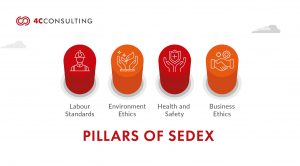
The SEDEX 4 Pillar Audit is the most widely requested SEDEX SMETA audit by global buyers. It assesses whether an organization operates responsibly by evaluating four key areas: Labour Standards, Health & Safety, Environment and Business Ethics.
Unlike the 2-Pillar Audit, which focuses only on labour standards and health & safety, the SEDEX 4 Pillar Audit provides a broader assessment of an organization’s responsible sourcing practices. This makes it the preferred choice for many multinational retailers, brands and importers seeking suppliers that meet international ethical and sustainability expectations.
SEDEX 4 Pillars
| Pillar | Focus Area |
|---|---|
| Labour Standards | Employee rights, wages, working hours and fair treatment |
| Health & Safety | Safe working conditions, risk management and employee wellbeing |
| Environment | Resource management, pollution control and environmental compliance |
| Business Ethics | Anti-bribery, transparency and responsible business conduct |
By successfully completing a SEDEX 4 Pillar Audit, organizations demonstrate their commitment to ethical operations, responsible sourcing and sustainable business practices. This not only strengthens buyer confidence but also improves supplier credibility and competitiveness in global markets.
How SEDEX Compliance Helps Exporters Win More International Business
SEDEX compliance helps exporters meet these expectations, strengthen buyer confidence and improve their competitiveness in global markets.
1. Simplifies Supplier Qualification
Securing approval from international buyers is often one of the biggest challenges exporters faces. Before placing an order, many multinational companies evaluate suppliers based on:
- Product quality
- Workplace conditions
- Employee welfare
- Ethical business practices
For example, an Indian packaging manufacturer supplying a European retailer may be required to complete a SMETA audit before being added to the approved supplier list. Demonstrating compliance with responsible sourcing requirements helps streamline supplier qualification and reduces delays in onboarding.
Instead of preparing separately for every customer assessment, exporters with a structured compliance framework are better positioned to respond quickly to buyer requirements and participate in global sourcing opportunities.
2. Builds Buyer Confidence and Long-Term Relationships
Global buyers are increasingly accountable for the practices of their suppliers. Any issue related to labour rights, workplace safety or unethical business conduct within the supply chain can affect a buyer’s reputation and expose them to regulatory and commercial risks.
This is why buyers prefer suppliers that can demonstrate responsible business practices through independent assessments.
For exporters, this means SEDEX compliance is more than an audit requirement it’s a way to build trust. When buyers see that a supplier has implemented structured policies for employee welfare, workplace safety, environmental management and business ethics, they gain greater confidence in the organization’s ability to meet long-term expectations. This trust often contributes to stronger business relationships, repeat orders and improved supplier retention.
3. Supports Responsible Sourcing and ESG Expectations
Responsible sourcing has become a key part of procurement strategies across industries such as retail, food, consumer goods, packaging and manufacturing. Many organizations now include Environmental, Social and Governance (ESG) considerations when selecting suppliers.
By implementing ethical labour practices, maintaining safe workplaces and strengthening environmental management, exporters demonstrate that they are aligned with these broader sustainability expectations.
For instance, a food ingredient manufacturer exporting to the UK may find that buyers request evidence of ethical sourcing alongside product quality certifications. Having established responsible business practices helps suppliers respond more effectively to these requirements while strengthening their position during supplier evaluations.
4. Reduces Audit Duplication and Improves Efficiency
Without a recognized ethical audit, exporters may need to undergo separate social compliance assessments for different customers. This can lead to:
- Increased compliance costs
- Repetitive audits
- Administrative burden
- Operational disruptions
By sharing audit reports through the SEDEX platform, organizations can reduce duplicate audits, simplify compliance management and focus more on business improvement than repeated assessments.
5. Strengthens Competitiveness in Global Markets
In today’s competitive marketplace, many suppliers offer similar products, comparable pricing and reliable delivery. Ethical business practices have therefore become an important differentiator during supplier selection.
A manufacturer that can demonstrate responsible labour practices, effective workplace safety management and transparent governance is often viewed as a lower-risk supplier. This gives buyers greater confidence when making sourcing decisions, particularly in industries where responsible sourcing is a contractual requirement.
Although SEDEX compliance does not guarantee export orders, it helps remove one of the most common barriers to entering international markets demonstrating that your business operates responsibly and meets overseas buyers’ expectations.
6. Supports Sustainable Business Growth
The benefits of responsible business practices extend well beyond passing an audit. Organizations often experience:
- Improved workplace safety
- Higher employee engagement
- Better operational discipline
- Stronger governance
- Increased customer confidence
For exporters planning long-term growth, ethical compliance is no longer just a customer requirement it’s an investment in resilience, stronger customer relationships and sustainable international expansion.
Ready to Expand Your Global Market Opportunities?
4C Consulting Insight: From Over 20 Years of Consulting Experience
Over the past two decades, we’ve observed that organizations with strong operational practices don’t always achieve smooth audit outcomes. In many cases, the challenge lies in inconsistent documentation, limited employee awareness or the absence of a structured internal audit process. Addressing these areas early helps businesses prepare more effectively and build long-term compliance not just pass an audit.
SEDEX Audit Readiness Checklist for Exporters
Before inviting an auditor, exporters should ensure their facility, documentation and workplace practices meet the expectations of international buyers and the SMETA audit process.
- Review and update employee contracts, labour policies and payroll records.
- Verify that working hours, overtime and wages comply with applicable labour laws.
- Ensure workplace health and safety measures are implemented and documented.
- Check that fire extinguishers, emergency exits and evacuation procedures are functional and clearly marked.
- Confirm that waste management, water usage and environmental practices are documented and effectively implemented.
- Review your business ethics, anti-bribery and anti-corruption policies, and ensure employees understand them.
- Maintain records of employee training, inductions and awareness programs.
- Conduct an internal audit or mock SMETA audit and close any identified non-conformities.
- Organize all required documents so they are readily available during the audit.
- Prepare managers and relevant employees for auditor interviews by explaining the audit process and likely questions.
Pro Tip: Exporters should conduct a mock audit before the official assessment. Identifying and closing gaps in advance can reduce non-conformities, improve audit readiness and create a stronger impression on international buyers.
How to Achieve SEDEX Compliance: Step-by-Step Process
Achieving SEDEX compliance requires a structured approach that combines ethical business practices, proper documentation and continuous improvement. While the exact process may vary depending on your organization and customer requirements, most businesses follow these six key steps.
Step 1: Register on the SEDEX Platform
Create a SEDEX account to manage compliance information and share audit reports with customers.
Step 2: Conduct a Gap Assessment
Assess your current practices against SEDEX compliance requirements to identify gaps in labour standards, health & safety, environmental management, business ethics and documentation.
Step 3: Implement Improvements
Update policies, strengthen workplace practices, train employees and close identified gaps before the audit.
Step 4: Complete the SMETA Audit
An approved third-party auditor reviews your documentation, inspects the workplace and interviews employees to evaluate compliance with the selected audit scope.
Step 5: Address Corrective Actions
Resolve any observations or non-conformities identified during the audit and implement corrective actions within the agreed timeframe.
Step 6: Maintain Continuous Compliance
Regularly review policies, conduct internal audits, train employees and monitor performance to maintain compliance and meet ongoing buyer expectations.
How Much Does SEDEX Compliance Cost?
There is no fixed SEDEX certification cost because SEDEX is a membership platform, not a certification body. The total cost depends on several factors, including:
- SEDEX membership fees
- Audit scope (2-Pillar or 4-Pillar)
- Number of sites and employees
- Audit duration
- Location of the facility
- Corrective actions, if required
As a general guide, the total investment typically ranges from USD 1,000 to USD 5,000 (approximately ₹85,000 to ₹4,25,000) per site, depending on the audit scope and organizational complexity.
Rather than focusing only on the audit cost, organizations should view SEDEX compliance as an investment that strengthens buyer confidence, supports supplier approval and improves access to international markets.
How 4C Consulting Helps You Achieve SEDEX Compliance
With over 20 years of consulting experience, 4C Consulting has helped organizations strengthen compliance, improve management systems and prepare confidently for global customer requirements. Our practical, hands-on approach ensures you’re not just audit-ready but positioned for long-term business success.
Our SEDEX Compliance Services Include:
- SEDEX Gap Assessment
- SEDEX SMETA Audit Preparation
- 2-Pillar & 4-Pillar Audit Readiness
- Documentation Development and Review
- Labour, Health & Safety, Environmental & Business Ethics Compliance
- Internal Audits and Mock Audits
- Corrective Action Support
- Post-Audit Improvement and Ongoing Compliance
Ready to Meet Global Buyer Requirements and Expand Your Export Opportunities?
Partner with 4C Consulting to simplify your SEDEX compliance journey and prepare for global buyer requirements.
Frequently Asked Questions (FAQs)
1. Which companies require SEDEX compliance?
Many global retailers, supermarkets, consumer goods companies, apparel brands and manufacturers require suppliers to complete a SMETA audit as part of their responsible sourcing program. Buyer requirements vary, so exporters should confirm the required audit scope before scheduling an audit.
2. Can I export without SEDEX compliance?
Yes. SEDEX compliance is not a legal requirement for exporting. However, many international buyers require suppliers to complete a SMETA audit before approving them as vendors. Without it, you may miss business opportunities with customers that have responsible sourcing requirements.
3. Is SEDEX accepted worldwide?
Yes. SEDEX is recognized by thousands of organizations across more than 170 countries and is widely used by international buyers to assess supplier compliance with ethical sourcing requirements.
4. How often should a SEDEX audit be renewed?
Most buyers expect suppliers to undergo a SMETA audit every 12 months, although the required frequency may vary depending on the buyer’s policies and the level of risk associated with the supplier.
5. What happens if my organization fails a SEDEX audit?
A SMETA audit does not result in a simple pass or fail outcome. If non-conformities are identified, the organization is expected to implement corrective actions within the agreed timeframe. Buyers then review the audit findings and corrective action status before making sourcing decisions.
6. Can SMEs obtain SEDEX compliance?
Yes. Businesses of all sizes can become SEDEX members and complete a SMETA audit. Many SMEs choose to implement SEDEX compliance to meet customer requirements and improve their competitiveness in international markets.
7. How long does it take to prepare for a SEDEX audit?
Preparation time depends on the organization’s existing management systems and level of compliance. Companies with established policies and documentation may be ready within a few weeks, while others may require several months to implement improvements before the audit.
8. Does a SEDEX audit guarantee new export business?
No. Completing a SMETA audit does not guarantee export orders. However, it demonstrates responsible business practices, strengthens supplier credibility and helps organizations meet the ethical sourcing requirements of many international buyers.
9. What’s the biggest reason organizations receive non-conformities during a SEDEX audit?
In our experience, the most common issues include incomplete documentation, inconsistent implementation of workplace procedures, inadequate employee awareness and weak corrective action processes. Conducting a gap assessment before the audit helps address these issues early.
10. Should I work with a SEDEX consultant?
If your organization is new to responsible sourcing or preparing for its first SMETA audit, working with an experienced consultant can simplify implementation, identify compliance gaps early and improve your audit readiness while reducing the risk of costly delays.

Sachin Mohan
General ManagerSachin Mohan is a General Manager at 4C Consulting with expertise in Food Standards, ISO 9001, ISO 14001, ISO 45001, SEDEX, and SA 8000. He supports organizations in strengthening management systems, improving compliance, and aligning business processes with recognized quality, environmental, health & safety, and social responsibility standards. His expertise helps businesses build structured systems that support responsible operations and continual improvement.