













Frequently Asked Questions
IATF 16949 is applicable to organizations manufacturing customer-specified products for production or service applications within the automotive supply chain. This includes manufacturers of automotive parts, components, assemblies and other customer-specified products.
Key requirements include process control, risk management, customer-specific requirements, supplier quality management, product safety, internal audits, corrective actions, continual improvement and monitoring of QMS processes.
IATF 16949 builds on ISO 9001 and adds automotive-specific requirements for organizations within the automotive supply chain. It places additional emphasis on customer-specific requirements, manufacturing process control, supplier quality and automotive-specific risk management.
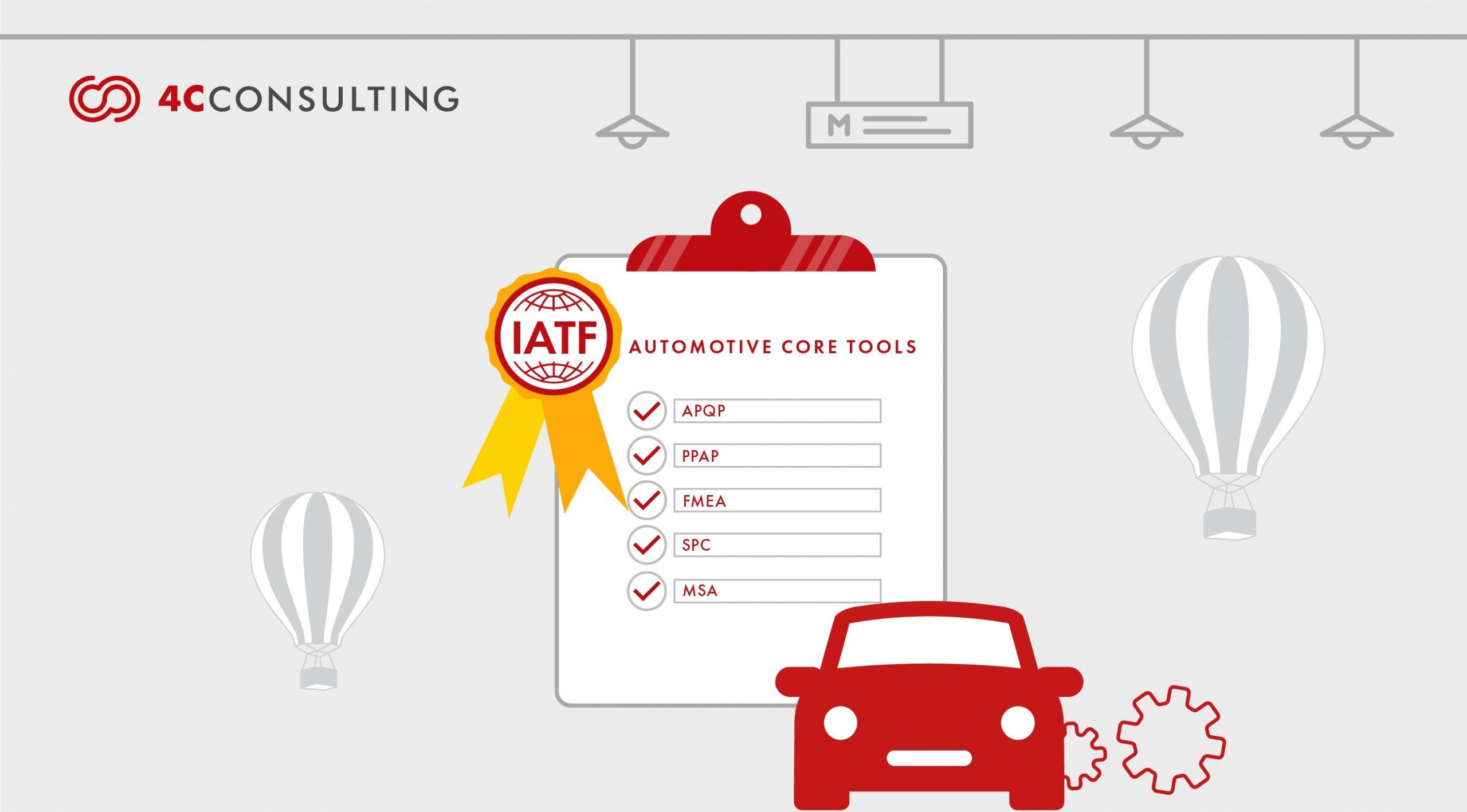
The Automotive Core Tools include APQP, PPAP, FMEA, SPC and MSA. These tools support product and process planning, risk analysis, production approval, process monitoring and measurement-system effectiveness.
The implementation timeline depends on the organization's size, certification scope, existing QMS, process complexity, documentation status and available resources. A gap assessment can help determine the implementation requirements and timeline.
The IATF 16949 certification cost in Pune depends on factors such as organization size, certification scope, number of sites, process complexity, existing QMS maturity and consulting requirements. Certification-body audit fees and consultancy costs may vary separately.
Yes. 4C Consulting provides support for gap assessment, QMS documentation, implementation, Automotive Core Tools training, internal audits, management review and certification audit preparation.
Yes. 4C Consulting can help organizations understand and incorporate applicable Customer-Specific Requirements into their Automotive QMS along with the relevant IATF 16949 requirements. OEM CSRs are maintained and updated by the IATF, so organizations should consider the current requirements applicable to their customers.
