
Table of Contents
- What We Know vs What We Expect from ISO 9001:2026
- Why Is ISO 9001 Being Revised?
- ISO 9001:2026 Revision Timeline (Expected)
- ISO 9001:2015 vs ISO 9001:2026 – Clause-by-Clause Expected Changes
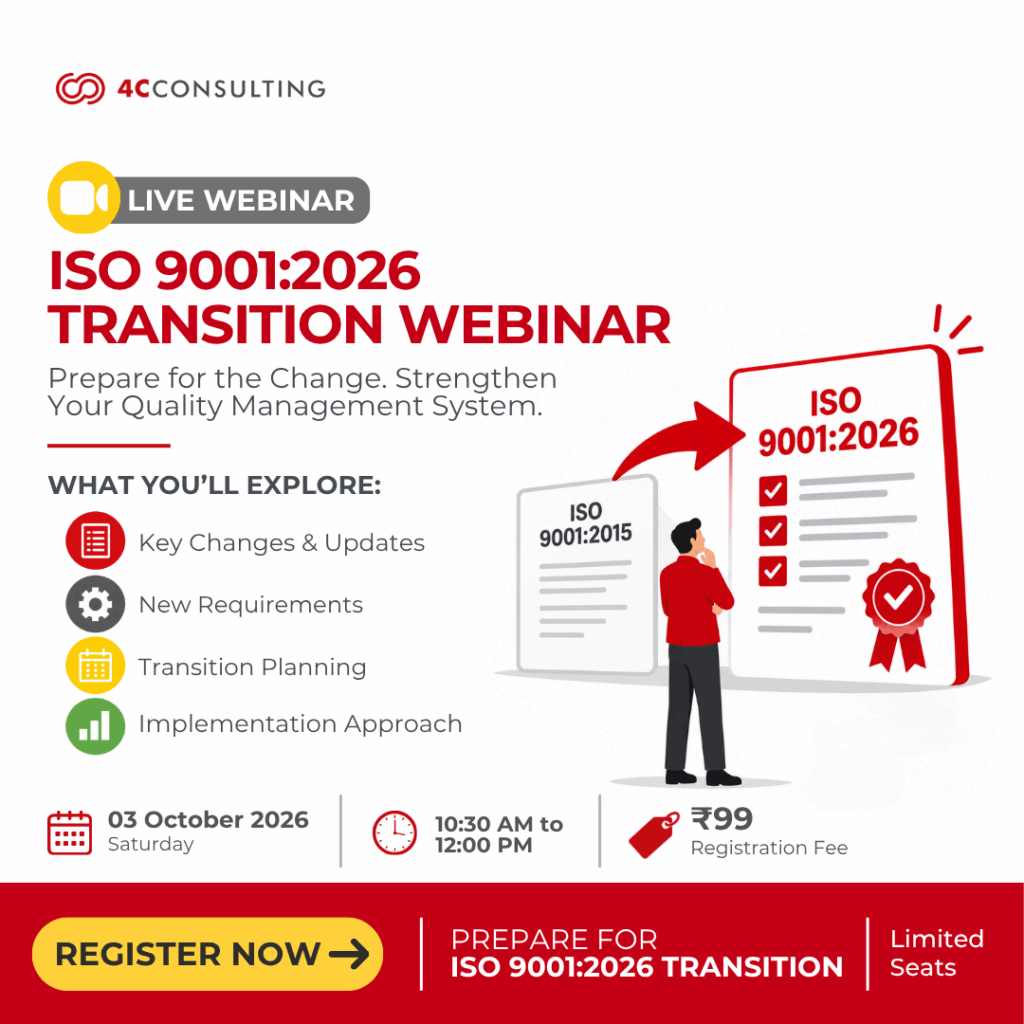
- PREPARE YOUR ORGANISATION FOR ISO 9001:2026 TRANSITION
- Summary Table – ISO 9001:2015 vs ISO 9001:2026
- How Certified Organizations Should Prepare for ISO 9001:2026 Today
- Common Transition Challenges Organizations May Face
- Need Help Preparing for ISO 9001:2026?
- FAQs
ISO 9001:2015 vs ISO 9001:2026: What Changes are expected?
26th Jun, 2026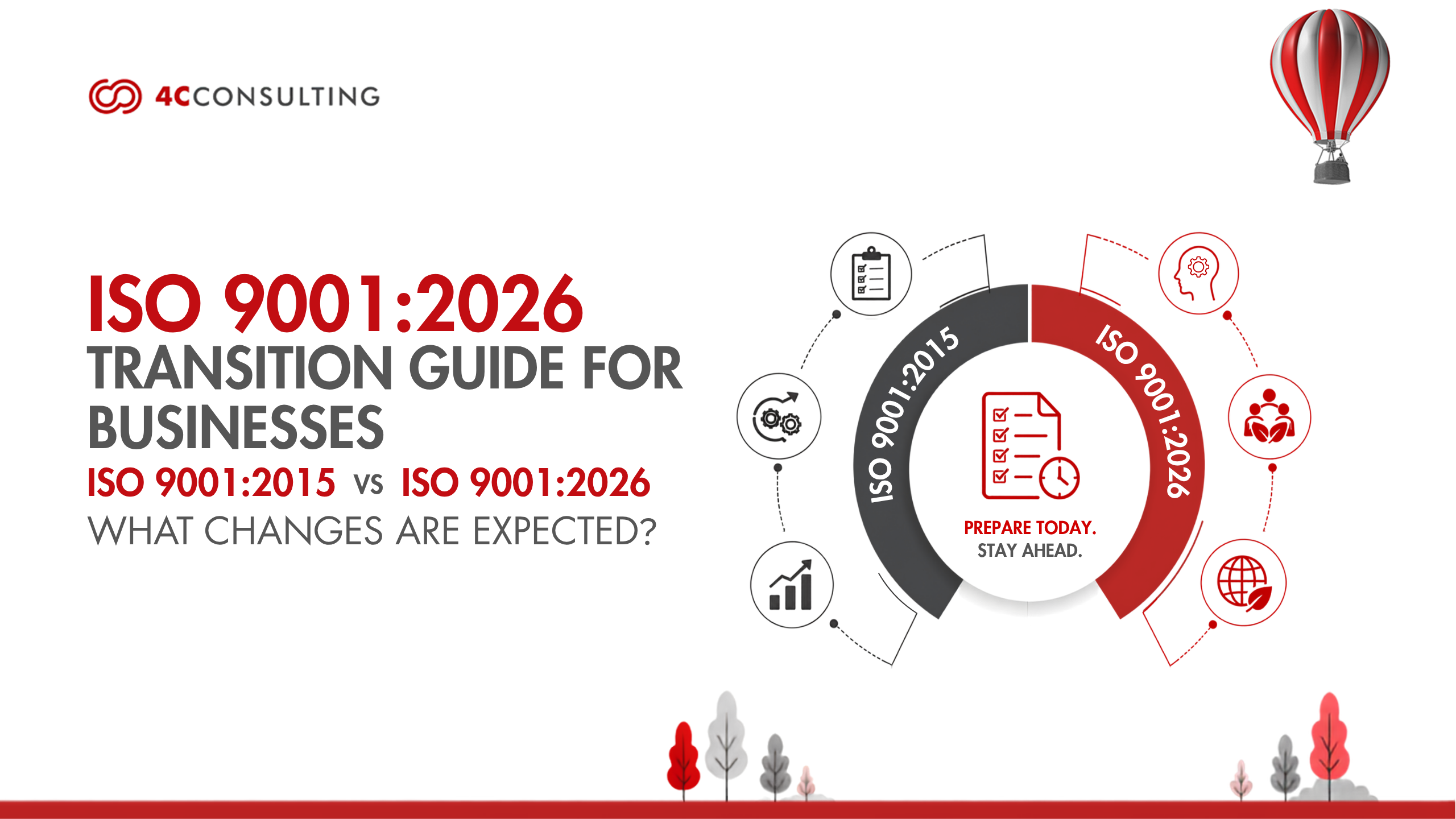
ISO 9001 is undergoing its most significant review since 2015. With AI, climate risks, cybersecurity threats and supply chain disruptions reshaping business operations, organizations are asking one key question: What will ISO 9001:2026 require and how should we prepare?
Today, organizations face new challenges such as digital transformation, supply chain disruptions, climate-related risks, evolving customer expectations, cybersecurity concerns and increasing ESG requirements. As a result, the upcoming ISO 9001:2026 revision is expected to modernize the standard and ensure it remains relevant in today’s business landscape.
Many organizations are already asking an important question: What will change in ISO 9001:2026 and how should we prepare for the transition?
In this guide, we compare ISO 9001:2015 vs ISO 9001:2026, examine the expected changes clause by clause and discuss practical actions organizations can take to stay ahead of the transition.
What We Know vs What We Expect from ISO 9001:2026
Before reviewing the expected changes, it is important to understand that ISO 9001:2026 has not yet been officially published. The observations discussed in this article are based on current revision discussions, industry trends and developments seen across other ISO management system standards. While the final requirements may differ, organizations can use these insights to begin evaluating areas that may require greater attention during the transition period.
Why Is ISO 9001 Being Revised?
ISO standards are periodically reviewed to ensure they remain relevant to current business realities. Since the publication of ISO 9001:2015, organizations have experienced unprecedented changes in technology, global supply chains, sustainability expectations and workforce dynamics.
The revision is expected to address several emerging business priorities, including:
- Digital transformation and automation
- Artificial intelligence and data-driven decision making
- Supply chain resilience
- Climate change and sustainability considerations
- Organizational culture and employee engagement
- Business continuity and resilience
- Evolving stakeholder expectations
Insight: The 2015 version was developed before AI adoption, widespread digital quality systems, ESG reporting requirements and recent global supply chain disruptions became major business concerns.
The objective of ISO 9001:2026 is expected to strengthen the Quality Management System framework while aligning it with modern business challenges.
ISO 9001:2026 Revision Timeline (Expected)
| Milestone | Expected Timeline |
|---|---|
| ISO 9001:2026 Publication | September 2026 |
| Transition Period | 2–3 Years After Publication |
| Expected Transition Deadline | September 2028 – September 2029 |
While the expected publication date is September 2026, organizations should begin evaluating potential transition impacts well before the official release of the revised standard.
ISO 9001:2015 vs ISO 9001:2026 – Clause-by-Clause Expected Changes
While ISO 9001:2026 has not yet been officially published, discussions around the revision suggest that the standard will evolve to address today’s business realities, including digital transformation, supply chain volatility, climate-related risks and increasing stakeholder expectations.
Rather than introducing an entirely new framework, the revision is expected to build upon the strengths of ISO 9001:2015 while encouraging organizations to adopt a more resilient, data-driven and future-focused approach to quality management.
Let’s look at the clauses where the most significant changes may emerge.
Clause 4 – Context of the Organization
Under ISO 9001, organizations are required to understand the internal and external issues that can affect their Quality Management System. This includes identifying interested parties, understanding their requirements and defining the scope of the QMS.
Since the publication of ISO 9001:2015, organizations have faced unprecedented challenges ranging from global supply chain disruptions and climate-related events to cybersecurity threats and changing customer expectations. As a result, ISO 9001:2026 is expected to encourage a broader assessment of business context.
Organizations may be expected to consider:
- Climate-related risks and opportunities
- ESG and sustainability expectations
- Supply chain vulnerabilities
- Emerging technologies
- Data security and information risks
Example: How This Could Change in Practice
A manufacturing company currently reviews customer requirements, supplier performance and market competition as part of its context analysis.
Under ISO 9001:2026, the same organization may also evaluate climate-related disruptions, sustainability requirements from global customers, geopolitical risks affecting suppliers and the impact of digital technologies on business operations.
Key Takeaway
Organizations may need to move beyond traditional business analysis and adopt a more forward-looking approach to identifying risks and opportunities that could affect long-term quality performance.
Clause 5 – Leadership
Leadership has always played a critical role in ISO 9001. The old version requires top management to demonstrate commitment to the QMS, establish quality policies and maintain customer focus throughout the organization.
The upcoming revision is expected to place greater emphasis on how leaders influence organizational culture and drive quality as a strategic business priority. Instead of viewing quality solely as the responsibility of the quality department, organizations may be encouraged to embed quality thinking across all functions and levels.
Potential areas of focus include:
- Building a strong quality culture
- Employee engagement and accountability
- Ethical leadership
- Managing organizational change
- Aligning quality objectives with business strategy
Example: How This Could Change in Practice
Today, top management may primarily review quality objectives, customer complaints and audit results during internal management review meeting.
In the future, leaders may be expected to play a more active role in promoting employee involvement, supporting digital quality initiatives and driving continuous improvement throughout the organization.
Key Takeaway
The focus may shift from leadership oversight to leadership influence, where management actively shapes behaviours, culture and quality performance.
PREPARE YOUR ORGANISATION FOR ISO 9001:2026 TRANSITION
Clause 6 – Planning
Old version of ISO 9001 introduced risk-based thinking to help organizations proactively identify and address potential issues before they impact performance.
However, the nature of business risks has changed significantly over the last decade. Organizations are now managing cyber threats, digital transformation projects, sustainability pressures and increasingly complex supply chains.
ISO 9001:2026 is expected to changes broader and more strategic approach to planning by considering:
- Strategic business risks
- Climate-related risks
- Supply chain disruptions
- Cybersecurity threats
- Business continuity concerns
- Risks associated with emerging technologies
Example: How This Could Change in Practice
A manufacturer currently identifies machine breakdowns, supplier delays and workforce shortages as key operational risks.
Under the revised standard, the organization may also evaluate risks associated with AI-driven production systems, dependence on single-source suppliers, cybersecurity vulnerabilities and climate-related disruptions.
Key Takeaway
Risk management is expected to become more closely linked with long-term business strategy rather than focusing only on day-to-day operational concerns.
Clause 7 – Support
Clause 7 focuses on the resources required to maintain an effective Quality Management System, including competence, awareness, communication and documented information.
As organizations increasingly rely on digital technologies, the definition of competence is evolving. Employees are no longer expected to understand only procedures and quality requirements; they must also be able to work effectively with digital systems and data.
The revised standard may place greater attention on:
- Digital competence
- Data literacy
- Knowledge management
- Technology adoption
- Organizational learning
Example: How This Could Change in Practice
An organization currently trains employees on work instructions, inspection methods and quality procedures.
In the future, training programs may also include digital quality tools, automated inspection systems, dashboard interpretation and data-driven decision-making techniques.
Key Takeaway
Organizations may need to expand their competency frameworks to include both traditional quality skills and digital capabilities.
Clause 8 – Operation
Clause 8 is the operational backbone of the Quality Management System, covering everything from planning and purchasing to production and service delivery.
Recent supply chain disruptions have highlighted the importance of operational resilience. As a result, ISO 9001:2026 is expected to place greater emphasis on how organizations manage external providers, outsourced processes and operational risks.
Areas likely to receive additional attention include:
- Supply chain resilience
- Outsourced process control
- Product traceability
- Automation and digital controls
- Operational risk monitoring
Example: How This Could Change in Practice
A company currently evaluates suppliers primarily on quality and delivery performance.
Under new version of ISO 9001, supplier evaluations may also include business continuity planning, sustainability performance, cybersecurity readiness and the supplier’s ability to respond to disruptions.
Recent global supply chain disruptions exposed a common weakness across many organizations: supplier quality alone does not guarantee operational stability. Even organizations with mature Quality Management Systems experienced production delays due to supplier shortages, logistics disruptions and limited visibility into supplier risks. This is one reason why supply chain resilience is expected to receive greater attention in the upcoming revision of ISO 9001.
Key Takeaway
Supplier management may evolve from a purchasing activity into a critical component of business resilience and risk management.
Clause 9 – Performance Evaluation
Old version requires organizations to monitor, measure, analyse and evaluate performance through audits, KPIs and management reviews.
The growing availability of digital tools and real-time data is expected to influence how organizations evaluate performance in the future. Instead of relying solely on historical data, businesses may increasingly use predictive insights to identify issues before they affect customers.
Expected areas of focus include:
- Data quality and reliability
- KPI effectiveness
- Predictive analytics
- Real-time monitoring
- Digital dashboards
Example: How This Could Change in Practice
Many organizations currently review monthly KPI reports and discuss performance trends during management review meetings.
Under the revised standard, management teams may use live dashboards, automated reporting systems and predictive analytics to identify potential quality issues before they occur.
Over the last few years, 4C Consulting has observed a growing shift from spreadsheet-based KPI reviews to real-time quality dashboards and automated reporting systems. Organizations that invest in digital quality monitoring often identify trends and potential nonconformities earlier, enabling faster corrective action and better decision-making.
Key Takeaway
Performance evaluation is expected to become more proactive, enabling faster and better-informed decision-making.
Clause 10 – Improvement
Continual improvement remains one of the core principles of ISO 9001. The Old version focuses on addressing nonconformities, implementing corrective actions and improving processes.
The 2026 revision is expected to strengthen the concept of organizational learning by encouraging businesses to use knowledge, data and experience more effectively to prevent issues and drive innovation.
Potential focus areas include:
- Organizational learning
- Knowledge retention
- Preventive culture
- Innovation
- Proactive improvement
Example: How This Could Change in Practice
An organization currently investigates customer complaints and implements corrective actions after issues occur.
Under ISO 9001:2026, the same organization may analyse trends, lessons learned, audit findings and operational data to identify potential problems before they result in nonconformities.
Key Takeaway
The emphasis may shift from reacting to problems toward creating systems that continuously learn, adapt and improve.
Summary Table – ISO 9001:2015 vs ISO 9001:2026
| Clause | ISO 9001:2015 Focus | Expected ISO 9001:2026 Focus |
|---|---|---|
| Context of the Organization | Understanding internal and external issues, interested parties and QMS scope | Broader business context including ESG expectations, climate-related risks, supply chain resilience and emerging technologies |
| Leadership | Leadership commitment, customer focus and quality policy | Stronger emphasis on quality culture, employee engagement, ethical leadership and organizational change |
| Planning | Risk-based thinking and quality objectives | Strategic risk management, climate risks, cybersecurity concerns, business continuity and emerging technology risks |
| Support | Competence, awareness, communication and documented information | Digital competence, data literacy, knowledge management and technology adoption |
| Operation | Operational planning, purchasing, production and service delivery | Supply chain resilience, outsourced process control, digital operations, traceability and operational risk monitoring |
| Performance Evaluation | Monitoring, measurement, internal audits and management review | Data-driven decision-making, predictive analytics, real-time monitoring and digital dashboards |
| Improvement | Corrective actions and continual improvement | Organizational learning, preventive culture, innovation, knowledge retention and proactive improvement |
How Certified Organizations Should Prepare for ISO 9001:2026 Today
Although the final requirements are still evolving, forward-looking organisations need not wait for formal publication to begin preparation. The following steps will position your organisation for a smoother, more confident transition:
1. Conduct a Preliminary Gap Assessment
Review your existing QMS against the anticipated changes outlined in this guide. Identify areas that may require enhancement and prioritise actions accordingly.
2. Strengthen Your Risk Management Framework
Expand risk assessments to include strategic, digital, climate-related and supply chain risks. Align quality risk management with broader enterprise risk governance.
3. Evaluate Your Digital Quality Capabilities
Assess whether your current quality systems support real-time monitoring, data analytics and informed decision-making. Identify gaps in digital readiness and plan investments accordingly.
4. Review Supplier Risk Management Processes
Develop more robust controls for outsourced processes and critical suppliers. Incorporate resilience, sustainability and cybersecurity into your supplier evaluation criteria.
5. Build a Stronger Quality Culture
Foster employee involvement, accountability and continuous improvement across all levels of the organisation. Leadership must visibly champion quality as a strategic priority not merely a compliance function.
6. Prepare Your Leadership Team
Ensure that top management understands the expected direction of ISO 9001:2026 and its implications for business strategy, culture and operations.
Common Transition Challenges Organizations May Face
As with any major standard revision, organisations may encounter challenges during the transition period. Being aware of these in advance enables more effective preparation:
- Limited awareness of expected requirements among leadership and quality teams
- Insufficient digital readiness or technology infrastructure
- Weak or narrowly scoped risk management frameworks
- Inadequate supplier monitoring and supply chain visibility
- Absence of a deliberate quality culture strategy
- Resource and capacity constraints affecting training and implementation
Organisations that begin their transition planning now well ahead of official publication will be significantly better positioned to manage the revision efficiently, minimise audit disruption and capitalise on the competitive advantages that a robust, future-ready QMS provides.
Need Help Preparing for ISO 9001:2026?
With over 20+ years of experience supporting organizations across manufacturing, engineering, pharmaceuticals, services and infrastructure sectors, 4C provide ISO 9001 Certification Consulting businesses to strengthen their Quality Management Systems, conduct gap assessments, implement ISO requirements and prepare for certification transitions with confidence.
Whether you are currently certified to ISO 9001:2015 or planning a new implementation, our experts can help you understand the expected ISO 9001:2026 changes and build a practical transition roadmap.
Contact 4C Consulting today to discuss your ISO 9001 transition strategy and stay ahead of the upcoming revision.
FAQs
1. Is ISO 9001:2026 Released?
No. ISO 9001:2026 has not been released yet. Organizations should continue following ISO 9001:2015 until the revised standard is officially published.
2. Will ISO 9001:2015 Certificates Remain Valid?
Yes. ISO 9001:2015 certificates are expected to remain valid during the official transition period, which will likely be two to three years after ISO 9001:2026 is released. After the transition period ends, organizations will need to upgrade to the new version to maintain certification.
3. ISO 9001:2015 vs ISO 9001:2026: What is the main difference?
ISO 9001:2015 focuses on risk-based thinking, customer satisfaction and process effectiveness. ISO 9001:2026 is expected to expand this focus by incorporating organizational resilience, digital transformation, strategic risk management, sustainability considerations and stronger quality culture principles.
4. How Long Will Organizations Have to Transition to ISO 9001:2026?
While the official transition period has not yet been announced, organizations will likely have 2 to 3 years to transition from ISO 9001:2015 to ISO 9001:2026 after the new standard is published.
5. Which Is the Current ISO 9001 Standard?
The current version of the standard is ISO 9001:2015. It was published in September 2015 and remains the valid version for Quality Management System (QMS) certification worldwide.
Although ISO 9001:2026 is under development, organizations seeking or maintaining certification should continue implementing and auditing against ISO 9001:2015 until the revised standard is officially released and transition requirements are announced.

Sachin Mohan
General ManagerSachin Mohan is a General Manager at 4C Consulting with expertise in Food Standards, ISO 9001, ISO 14001, ISO 45001, SEDEX, and SA 8000. He supports organizations in strengthening management systems, improving compliance, and aligning business processes with recognized quality, environmental, health & safety, and social responsibility standards. His expertise helps businesses build structured systems that support responsible operations and continual improvement.